

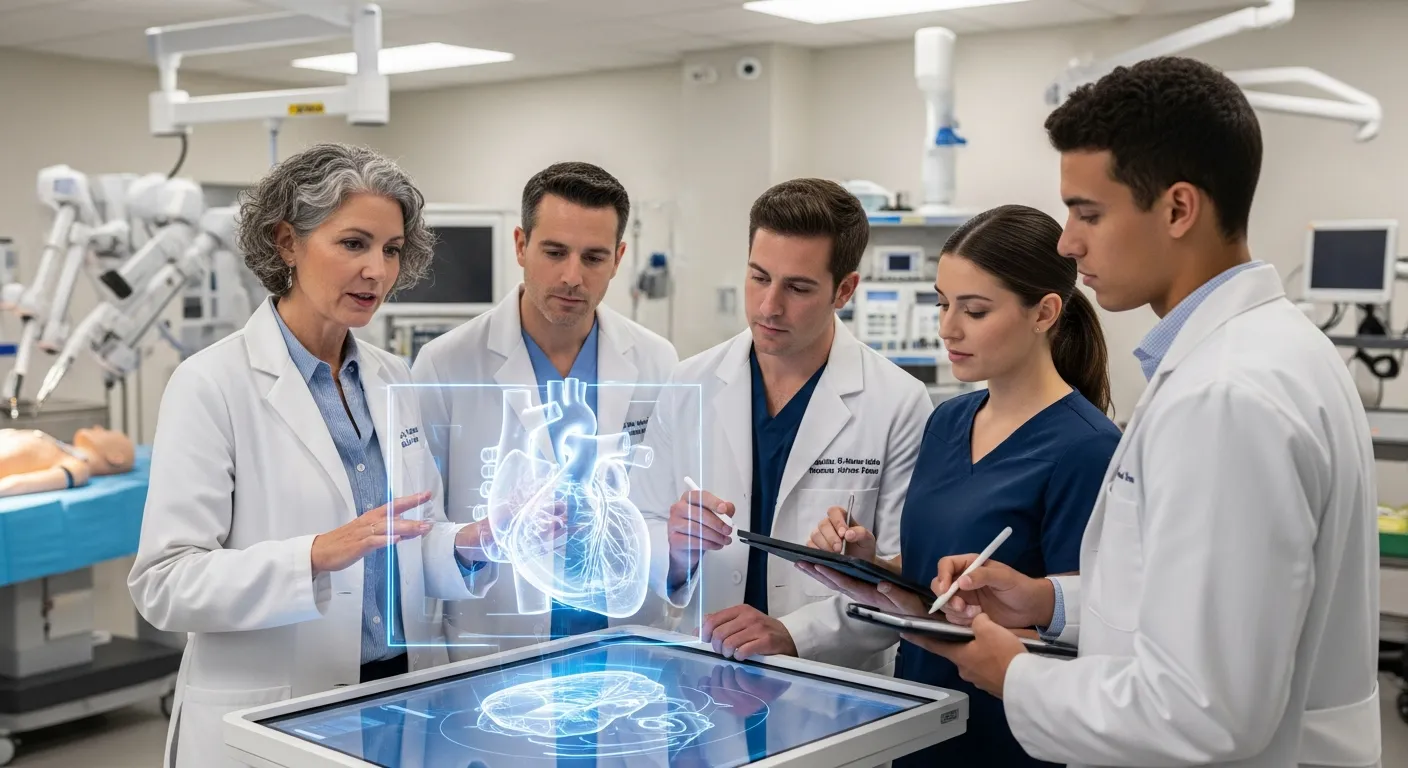
Innovative Medical Education Strategies use AI, VR, simulation, and digital tools to improve clinical training and learning outcomes. These modern approaches make medical education more interactive, practical, and effective, helping healthcare professionals develop stronger clinical skills and real-world experience.
Medical science expands daily, bringing new treatments, updated protocols, and advanced diagnostic tools to the forefront of patient care. Keeping up with this massive influx of information requires more than late-night textbook reading. Healthcare professionals need dynamic, adaptable, and highly effective ways to learn and retain complex knowledge. This is exactly why identifying and implementing innovative medical education strategies has become a top priority for teaching hospitals, universities, and continuous learning programs.
Relying solely on static lectures and rote memorization leaves gaps in clinical readiness. Modern clinicians require hands-on practice, personalized feedback, and engaging platforms that simulate real-world pressures without risking patient safety. By modernizing how we teach and learn, the healthcare industry can produce more confident, capable, and adaptable professionals.
This comprehensive guide explores the most effective innovative medical education strategies available today. You will discover how digital tools, pedagogical shifts, and continuous professional development frameworks are radically altering the clinical learning landscape. By understanding these approaches, educators and practitioners can better navigate the future of medicine.
The Urgent Need for Innovative Medical Education Strategies
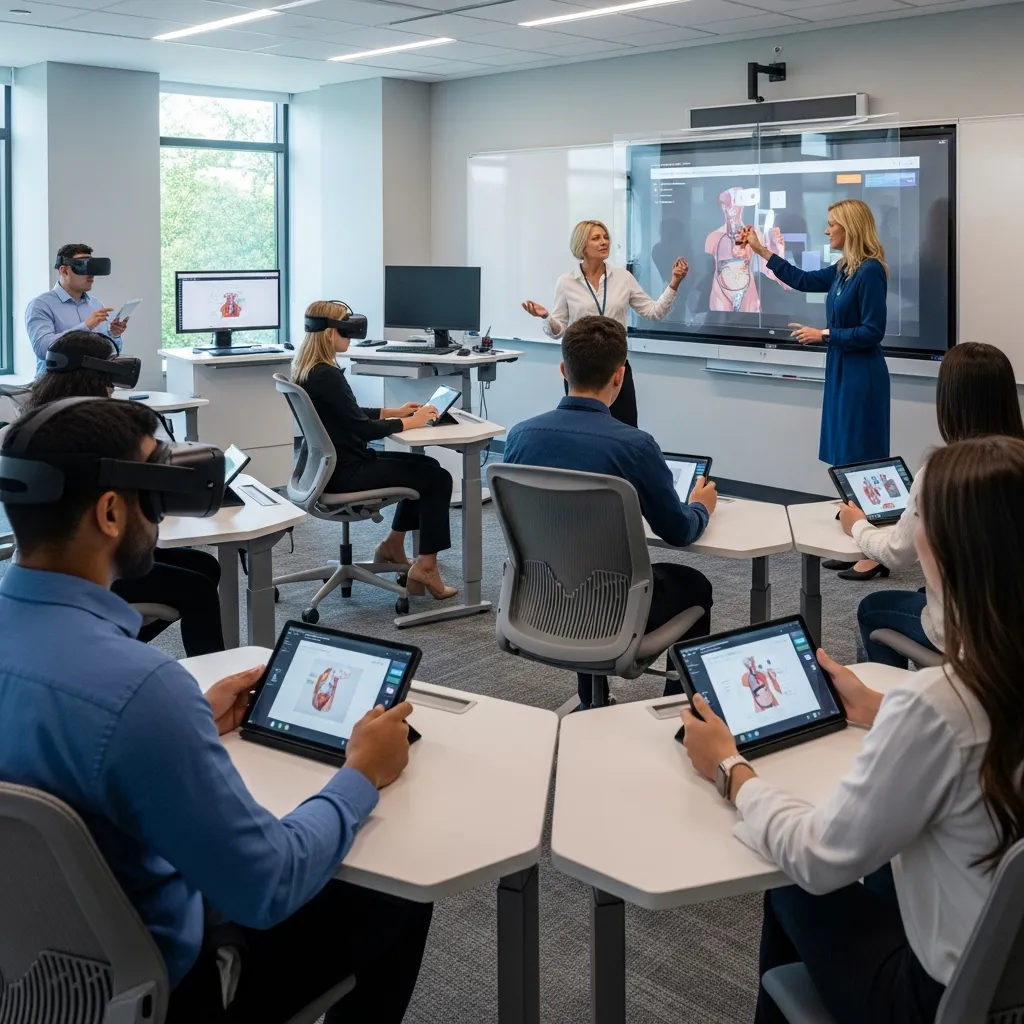 For generations, the path to becoming a physician followed a highly predictable route. Students sat in large lecture halls, absorbed immense amounts of theoretical data, and eventually moved into clinical rotations. While this model successfully trained millions of excellent doctors, it struggles to manage the sheer volume of modern scientific data.
The modern clinical environment demands rapid critical thinking, interdisciplinary collaboration, and technological fluency. A student who only knows how to pass written exams may struggle when faced with a rapidly deteriorating patient in an emergency room. Innovative medical education strategies bridge this specific gap. They transition the learning process from passive absorption to active application.
Furthermore, patients present with increasingly complex, chronic conditions that require highly nuanced care plans. Preparing clinicians to handle these multifaceted challenges means moving away from a one-size-fits-all curriculum. It requires adaptive learning models that respond to individual strengths and weaknesses, ensuring every graduating professional meets a strict standard of clinical excellence.
Core Technologies Driving Clinical Learning
Technology serves as the backbone for many innovative medical education strategies. By integrating digital platforms into the curriculum, programs can create highly realistic, repeatable, and safe training scenarios.
Virtual and Augmented Reality
Virtual reality (VR) and augmented reality (AR) have completely changed how students study anatomy and practice surgical techniques. Through VR headsets, a learner can step into a fully realized digital operating room. They can practice an appendectomy or a complex cardiac procedure multiple times. If they make a mistake, a digital alarm sounds, but no patient is harmed. This repetition builds essential muscle memory.
Augmented reality overlays digital images onto the physical world. A student wearing AR glasses can look at a medical mannequin and see a 3D simulation of a beating heart or expanding lungs. This visual integration helps learners understand spatial relationships within the human body far better than a two-dimensional drawing. To see how these tools fit into a broader digital ecosystem, review this medical education technology overview.
Artificial Intelligence in the Classroom
Artificial intelligence (AI) brings unprecedented personalization to clinical training. AI-driven platforms can analyze a student’s test scores, simulation performance, and study habits in real time. If the system detects a consistent misunderstanding of renal pathology, it automatically adjusts the curriculum to provide targeted reading materials and practice quizzes on that specific topic.
This level of customization ensures that learners master foundational concepts before advancing. Additionally, AI tutors offer instant feedback on diagnostic exercises. Instead of waiting weeks for a professor to grade a case study, students know immediately where their clinical reasoning succeeded or failed. You can explore this transformation further by reading about AI in medical education.
Pedagogical Shifts in Clinical Training
Technology alone cannot fix an outdated curriculum. True progress requires a fundamental shift in how educators approach the teaching process. Several pedagogical models have emerged as leading innovative medical education strategies.
Competency-Based Medical Education
Historically, medical training relied heavily on time-based metrics. A student spent a set number of weeks on a surgical rotation and then moved on, regardless of their actual proficiency. Competency-Based Medical Education (CBME) flips this paradigm.
Under the CBME model, students only advance when they prove they have mastered a specific clinical skill. This approach focuses heavily on outcomes rather than hours logged. It allows fast learners to move quickly through familiar material while giving others the extra time they need to achieve true competence. This ensures that every graduating clinician meets a rigorous, verified standard of care.
The Flipped Classroom Model
The flipped classroom model reverses traditional teaching methods. Instead of using valuable classroom time to listen to a lecture, students review the theoretical material at home via video modules or reading assignments. When they arrive at the classroom or clinic, they spend their time actively applying that knowledge.
Instructors use face-to-face time for interactive case studies, group problem-solving, and hands-on simulations. This active learning approach forces students to engage with the material critically. It encourages them to ask questions, debate diagnostic approaches with peers, and refine their clinical reasoning under the guidance of experienced mentors.
Interprofessional Education
Healthcare is a team effort, yet doctors, nurses, and pharmacists have historically trained in silos. Interprofessional Education (IPE) brings these different disciplines together during their training years.
By running joint simulations, students learn how to communicate effectively across departmental lines. A medical student learns the practical constraints a floor nurse faces, while a pharmacy student gains insight into surgical prescribing challenges. This collaborative training significantly reduces workplace friction and lowers the risk of medical errors caused by poor communication. For more on structuring these collaborative models, check out this modern learning guide.
Sustaining Growth Through Continuous Development
 Graduating from medical school is merely the starting line. A successful clinical career requires a lifelong commitment to learning. Innovative medical education strategies must extend far beyond the university setting to support practicing professionals.
Microlearning for Busy Clinicians
Practicing doctors and nurses rarely have time to sit through hour-long lectures. Microlearning breaks complex medical updates into small, easily digestible segments. A clinician can watch a five-minute video on a new diabetes medication or complete a short interactive quiz on their phone during a break. This approach makes it easy to integrate continuous education into a demanding daily schedule.
Point-of-Care Learning
Point-of-care learning tools bring medical education directly to the patient’s bedside. When a doctor encounters an unfamiliar symptom or needs to double-check a drug interaction, they can access peer-reviewed databases and diagnostic algorithms via a tablet or smartphone. This immediate access to information reinforces knowledge exactly when it is most relevant, embedding it deeply into the clinician’s memory. To understand how institutions structure these ongoing programs, read more about lifelong learning in medical education.
Global health organizations also heavily emphasize this continuous growth. Resources provided by the World Health Organization (WHO) often serve as foundational updates for clinicians working to stay aligned with international best practices.
Overcoming Barriers to Implementation
While the benefits of these innovative medical education strategies are clear, institutions face significant hurdles when trying to implement them.
Funding remains a primary obstacle. High-fidelity simulation manikins, VR software, and custom AI platforms require massive financial investments. Smaller teaching hospitals or rural clinics often struggle to afford these resources. To combat this, institutions must seek out grants, form partnerships with larger universities, and prioritize scalable, cloud-based software that can be distributed efficiently.
Faculty pushback also presents a challenge. Experienced educators who have successfully taught using traditional methods for decades may resist adopting new digital platforms or competency-based models. Overcoming this requires robust faculty development programs. Institutions must provide educators with the time, training, and ongoing technical support needed to feel confident using these new tools. When professors understand how these strategies make their teaching more effective, adoption rates rise significantly.
Additionally, researchers supported by entities like the National Institutes of Health (NIH) continually study the efficacy of these new teaching tools to ensure they truly improve clinical outcomes, providing the data needed to justify these large institutional shifts.
The Future of Clinical Training
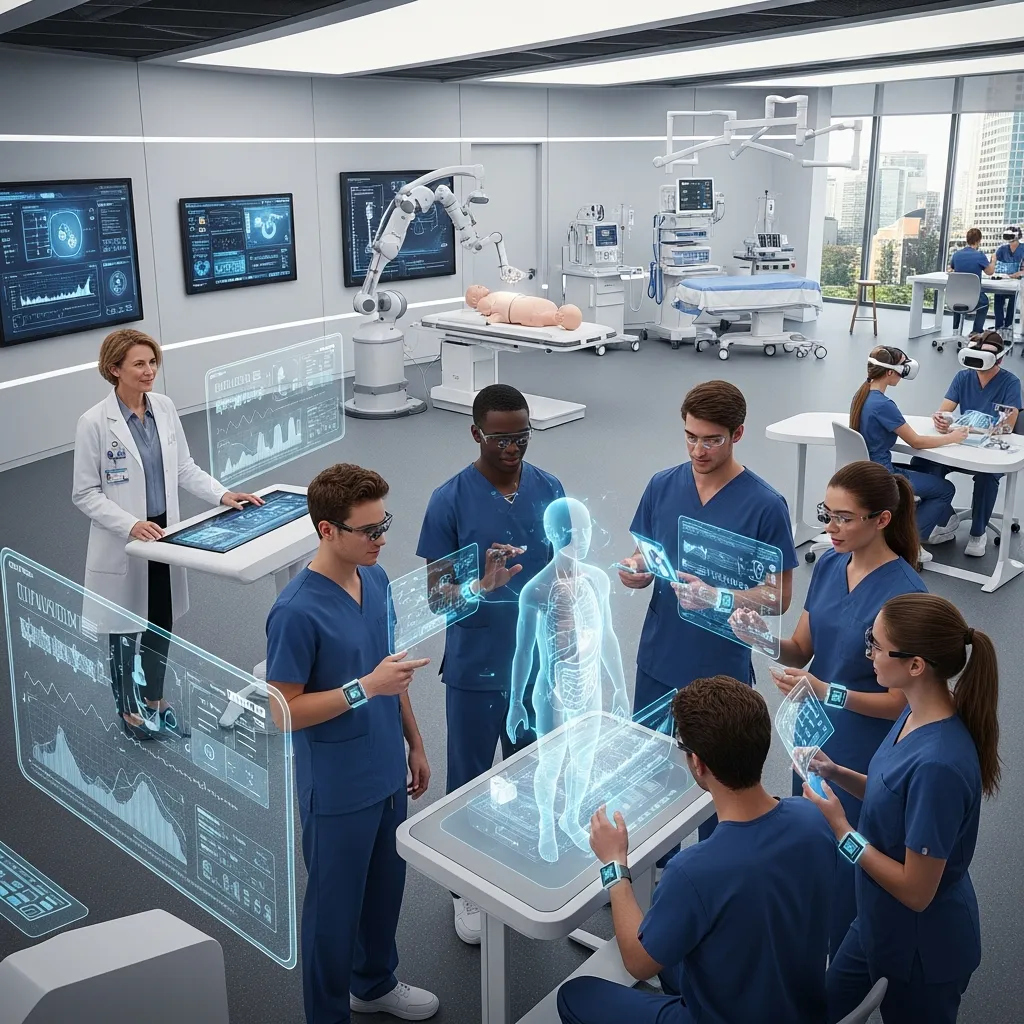 The landscape of medical education is changing rapidly. As we look toward the future, innovative medical education strategies will become even more integrated, personalized, and immersive.
We can expect to see biometric tracking used during simulations. Software will monitor a student’s heart rate, eye movements, and stress levels during a virtual surgery. The system will then use this data to provide hyper-specific feedback on how the student manages high-pressure situations, helping them develop emotional resilience alongside technical skills.
Furthermore, global collaboration will expand. Cloud-based simulation platforms will allow a medical student in New York to practice a complex procedure alongside a surgical resident in Tokyo, guided by a specialist in London. This cross-cultural, borderless approach to learning will democratize medical knowledge and elevate the standard of care worldwide.
Conclusion
Innovative Medical Education Strategies are reshaping how clinicians learn, train, and develop their skills in modern healthcare systems. By integrating technologies such as AI, VR, simulation-based learning, and digital platforms, medical education becomes more practical, engaging, and aligned with real clinical environments. These approaches not only improve knowledge retention but also enhance decision-making and patient care outcomes. As healthcare continues to evolve, adopting innovative medical education strategies is essential for preparing competent, confident, and future-ready medical professionals.
