
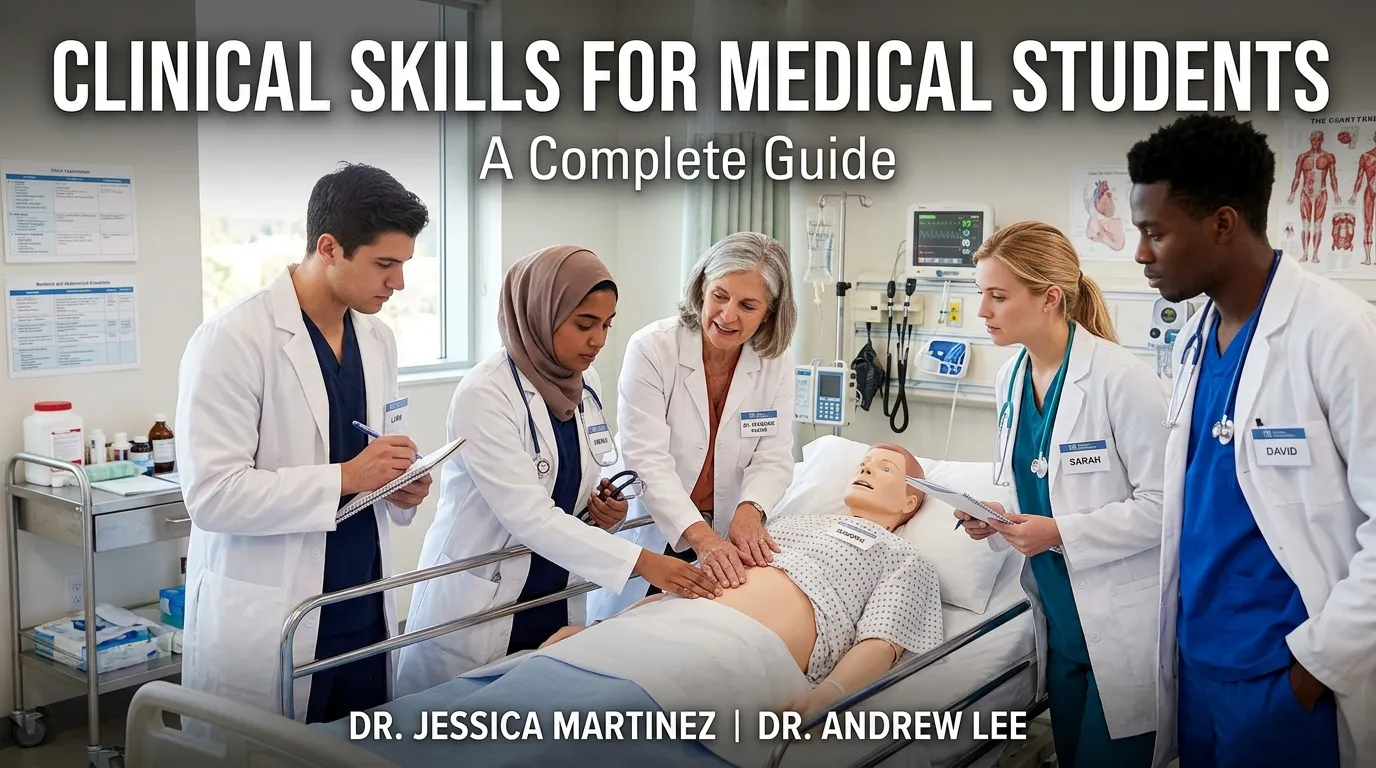
Clinical skills for medical students are essential for delivering safe and effective patient care. Mastering history taking, physical examination, communication, and clinical reasoning helps students build confidence, improve diagnostic accuracy, and prepare for successful medical practice.
Clinical skills for medical students include history taking, patient examination, communication, and procedures—learned through practice, feedback, and patient contact to build safe, competent doctors.
Medical school teaches you to read an ECG and recite the Krebs cycle. But the moment you stand at a patient’s bedside, a different set of abilities takes over. Can you put a nervous patient at ease? Can you spot a murmur, gather a clear history, and explain a diagnosis without jargon? These are clinical skills—and they separate textbook knowledge from real doctoring.
Clinical skills for medical students form the practical core of medical training. They turn facts into action and theory into care. Strong patient examination skills, sharp medical history-taking skills, and confident clinical communication skills will carry you through exams, rotations, and your entire career.
This guide walks you through every major area of clinical competence. You’ll learn how to take a structured history, perform a systematic physical exam, communicate with empathy, and master essential procedures. We’ll also cover clinical reasoning, professionalism, and the technology reshaping how future doctors learn. Whether you’re a first-year student or preparing for clinical rotations, these skills will help you grow into a capable, compassionate clinician.
Developing clinical competence is not something that happens overnight. It requires consistent practice, observation, reflection, and feedback from mentors and patients. Every patient encounter provides an opportunity to strengthen your diagnostic thinking and interpersonal abilities.
As healthcare becomes increasingly patient-centred, effective communication and teamwork are just as important as medical knowledge. Students who invest time in building strong clinical foundations often perform better during rotations and adapt more confidently to the responsibilities of residency.
By mastering these essential skills early, you will be better prepared to make informed clinical decisions, deliver high-quality care, and build trusting relationships with patients throughout your medical career.
Why Are Clinical Skills So Important in Medical Education?
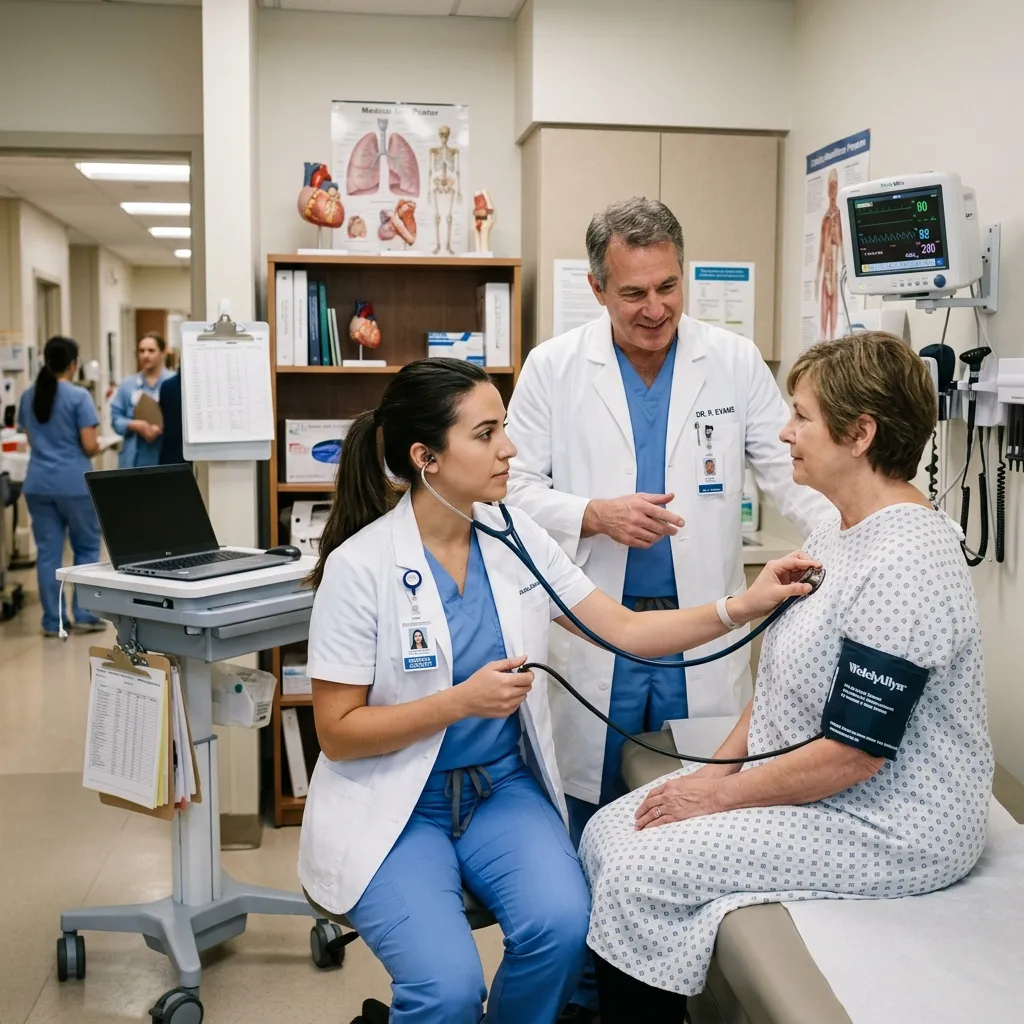 Clinical skills are the bridge between knowing and doing. A student may ace every written exam, yet still struggle to draw blood, deliver bad news, or examine a patient correctly. That gap is exactly what clinical training closes.
These skills matter because medicine is hands-on. Patients don’t present as neat textbook cases. They arrive anxious, in pain, and often unsure what’s wrong. Your ability to listen, examine, and reason determines whether you reach the right diagnosis and earn their trust. Strong patient examination skills and effective medical history-taking skills are often the foundation of accurate diagnosis and successful treatment.
Clinical proficiency also keeps patients safe. A missed sign, an incomplete history, or a poorly performed procedure can lead to delayed diagnosis, inappropriate treatment, or unnecessary complications. This is why medical schools place such a strong emphasis on developing practical competence alongside theoretical knowledge.
Beyond safety, strong clinical skills build confidence. Students who practice early and often feel far more prepared when they step onto the wards. Regular exposure to patients helps reduce anxiety, improve decision-making, and strengthen professional judgment in real clinical settings.
Equally important are clinical communication skills, which allow future doctors to explain conditions clearly, obtain informed consent, and provide emotional support during difficult situations. Effective communication improves patient satisfaction, strengthens doctor-patient relationships, and contributes to better health outcomes.
Ultimately, clinical skills for medical students are not just academic requirements—they are essential tools for delivering compassionate, evidence-based care. The earlier these skills are developed and refined, the stronger the foundation for a successful and rewarding medical career. If you want to strengthen the study habits that support this growth, our guide on how to study medicine effectively pairs well with hands-on practice.
How Do You Master Medical History Taking Skills?
Medical history-taking skills are the foundation of every clinical encounter. Studies consistently show that a thorough history alone leads to the correct diagnosis in most cases—often before any examination or test. Learning to gather information well is one of the most valuable clinical skills for medical students.
Why Does Active Listening Matter in History Taking?
A good history starts with listening. Let the patient tell their story before you interrupt with questions. Use open-ended prompts like “Tell me more about that.” Maintain eye contact, nod, and show genuine interest. Empathetic inquiry—acknowledging fear or pain—builds rapport and encourages patients to share details they might otherwise hide.
What Is the Structured Approach to Taking a Patient History?
A clear structure ensures you never miss key information.
Most clinicians follow this proven sequence:
- Presenting complaint (PC): The main problem in the patient’s own words.
- History of presenting complaint (HPC): The full story of the symptom—onset, duration, character, severity, and what makes it better or worse.
- Past medical history (PMH): Previous illnesses, surgeries, and chronic conditions.
- Drug history (DH) and allergies: Current medications, doses, and any reactions.
- Family history (FH): Inherited or genetic conditions in close relatives.
- Social history (SH): Smoking, alcohol, occupation, living situation, and lifestyle.
- Systems review (SR): A quick screen of other body systems to catch anything missed.
Following this order keeps your history complete, logical, and easy to present to seniors.
How Do You Adapt History Taking for Special Patient Groups?
Not every patient fits the standard mould. With children, you’ll often gather information from a parent while still engaging the child. With elderly patients, you may need to allow extra time, speak clearly, and screen for memory or mobility issues. Patients with cognitive impairment or language barriers require patience and sometimes an interpreter. Adapting your approach is a mark of skilled, patient-centred care.
What Are the Essential Patient Examination Skills?
 Patient examination skills let you turn observation into clinical evidence. A systematic physical exam confirms or rules out the possibilities your history raised. The key is consistency—follow the same routine every time so nothing slips through.
What Are the Four Core Techniques of Physical Examination?
Nearly every system examination relies on four classic techniques, performed in order:
- Inspection: Look carefully—skin colour, swelling, breathing pattern, posture.
- Palpation: Feel for tenderness, lumps, temperature, and pulses.
- Percussion: Tap to assess what lies beneath—fluid, air, or solid tissue.
- Auscultation: Listen with your stethoscope to the heart, lungs, and abdomen.
Mastering this sequence is one of the most transferable clinical skills for medical students.
How Do You Perform a Head-to-Toe Examination?
Each body system has its own focused routine.
The main examinations you’ll practice include:
- Cardiovascular system: Check the pulse, blood pressure, and JVP, then inspect, palpate, and auscultate the heart for murmurs and added sounds.
- Respiratory system: Assess breathing, chest expansion, percussion notes, and breath sounds for signs of infection or fluid.
- Abdominal examination: Inspect, then gently palpate for tenderness or masses, percuss for organ size, and listen for bowel sounds.
- Neurological examination: Test cranial nerves, power, tone, reflexes, sensation, and coordination.
- Musculoskeletal examination: Use the “look, feel, move” approach to assess joints and movement.
Why Are Consent and Patient Comfort So Important?
Always introduce yourself, explain what you plan to do, and gain consent before touching a patient. Ensure privacy, warm your hands, and ask about pain throughout. A comfortable patient cooperates better, and respecting dignity is central to good patient care guidelines.
How Do You Build Strong Clinical Communication Skills?
Clinical communication skills shape every part of medicine. Research from the medical education field shows that good communication improves diagnosis accuracy, treatment adherence, and patient satisfaction. These skills are just as essential as any examination technique.
What Does Effective Patient Communication Look Like?
Effective communication blends verbal and non-verbal signals. Speak in plain language, avoid medical jargon, and check that the patient understands. Your body language matters too—sit at eye level, maintain an open posture, and give patients your full attention. Silence can be powerful, giving patients space to think and respond.
How Do You Break Bad News to a Patient?
Delivering difficult news is one of the hardest clinical skills to learn. Many clinicians use the SPIKES framework: set up the conversation, assess the patient’s perception, get their invitation to share, give the information clearly, respond to emotions, and agree on a strategy. Speak slowly, pause often, and allow time for reactions. Honesty paired with compassion makes a painful moment bearable.
Why Does Interprofessional Communication Matter?
Medicine is a team sport. You’ll work alongside nurses, pharmacists, physiotherapists, and specialists every day. Clear handovers, respectful collaboration, and shared decision-making prevent errors and improve care. Strong teamwork also supports broader quality improvement methods in healthcare that keep patients safe.
What Procedural Skills Should Medical Students Learn?
Procedural skills are the practical, hands-on tasks every doctor must perform. You’ll learn them in skills labs first, then under supervision with real patients. Repetition builds the muscle memory and confidence you need.
Key procedures for medical students include:
- Venepuncture and cannulation: Drawing blood and placing IV lines safely and cleanly.
- Basic and advanced life support (BLS and ACLS): Recognising cardiac arrest, performing CPR, and following resuscitation algorithms.
- Wound care and suturing: Cleaning wounds, applying dressings, and closing simple lacerations.
- Diagnostic procedures: Recording and beginning to interpret an ECG, a skill you’ll use constantly.
Practice these in a controlled setting until the steps feel automatic. Confidence with procedures lowers patient anxiety and reduces the risk of complications.
How Do You Develop Clinical Reasoning and Problem-Solving?
Clinical reasoning is the thinking that ties everything together. It’s how you move from a list of symptoms to a working diagnosis and a clear plan. This skill grows with every patient you see.
The diagnostic process usually follows a logical path. You gather data through history and examination, generate a differential diagnosis, then order tests to narrow it down. Each piece of evidence either supports or rules out a possibility. Strong reasoning means staying open-minded while avoiding common thinking traps, like anchoring on the first idea.
Once you reach a diagnosis, you’ll formulate a management plan—covering investigations, treatment, and follow-up. Always ground these decisions in evidence-based practice and current guidelines. Critical thinking, paired with humility about what you don’t yet know, is the hallmark of a safe clinician. This mindset connects closely with structured chronic disease management approaches.
Why Do Professionalism and Ethics Matter in Clinical Practice?
Clinical skills mean little without professionalism behind them. Patients trust you with their most private information and their bodies. Honouring that trust is a daily responsibility.
Maintaining confidentiality and privacy is fundamental. Never discuss patients in public spaces or share records beyond the care team. You’ll also face ethical dilemmas—questions about consent, capacity, end-of-life care, and competing interests. There are rarely easy answers, but core principles guide you: respect autonomy, do good, avoid harm, and treat people fairly.
Above all, empathy and compassion define great doctors. A kind word, a moment of patience, and genuine concern often matter more to patients than technical brilliance. These human qualities are skills too—and you can strengthen them with practice.
How Is Technology Changing Clinical Skills Development?
Technology is transforming how students learn clinical skills. Simulation and digital tools now let you practice safely before ever touching a real patient.
Simulation training uses lifelike mannequins and virtual reality to recreate clinical scenarios. You can practice CPR, manage emergencies, and even perform virtual procedures—making mistakes and learning without risk. Electronic health records (EHRs) are now central to daily practice, so learning to document accurately and navigate digital systems is an essential modern skill. Telemedicine has added another layer, requiring students to examine and communicate with patients remotely. To explore this shift further, see how AI is shaping medical education and training.
According to the Association of American Medical Colleges (AAMC), simulation-based education improves both skills and patient safety, making it a growing part of every curriculum.
How Do You Keep Improving Your Clinical Skills Over Time?
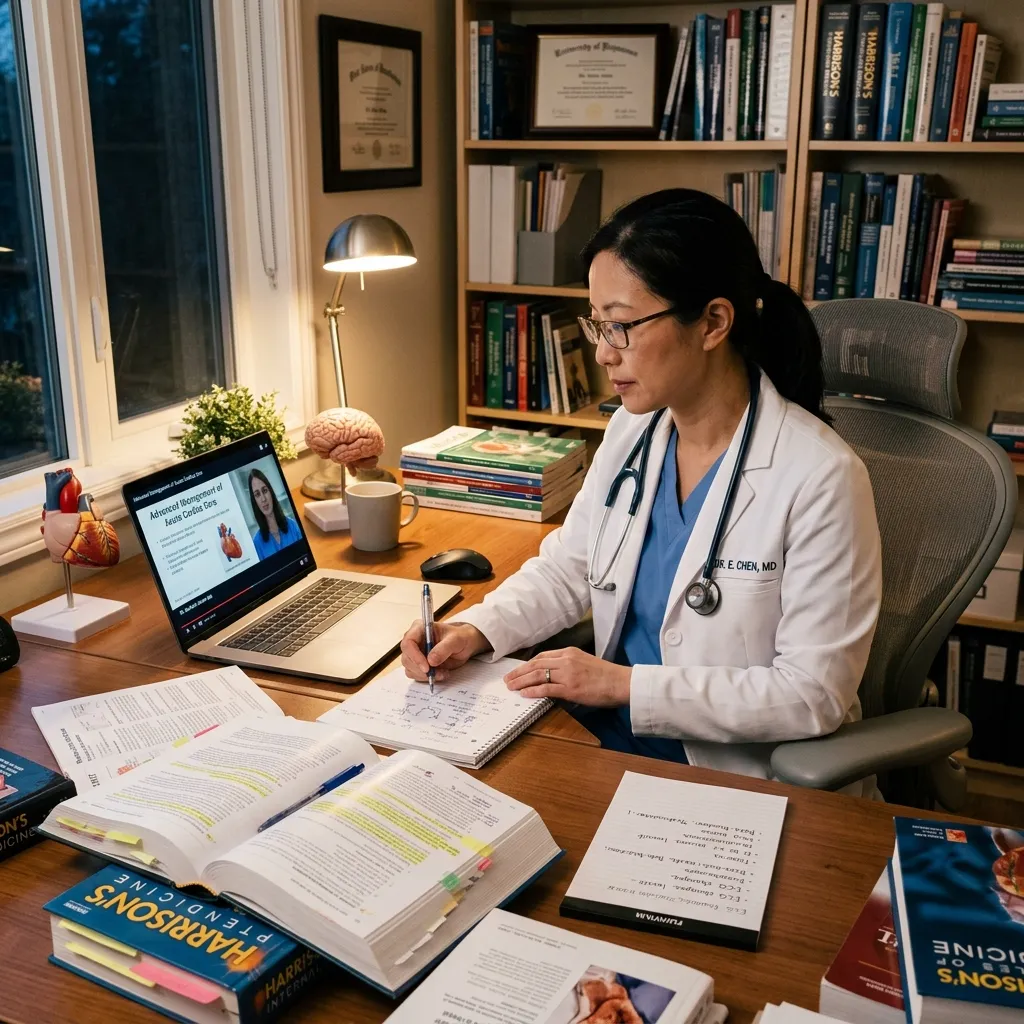 Clinical skills are never “finished.” The best doctors refine them throughout their careers. Building habits of continuous learning now will serve you for decades.
Reflective practice is a powerful tool. After each clinical encounter, ask yourself what went well and what you’d do differently. Seeking feedback is equally vital—invite seniors, peers, and even patients to comment on your performance, then act on what you hear. Mentorship accelerates growth, giving you a trusted guide who has walked the path before you.
Medicine evolves constantly, with new evidence and techniques emerging all the time. Embracing lifelong learning keeps your skills sharp and your knowledge current. According to the General Medical Council (GMC), ongoing professional development is a core duty of every doctor, not an optional extra.
Conclusion
Mastering clinical skills for medical students is a journey, not a single milestone. Strong medical history-taking skills, careful patient examination skills, and warm clinical communication skills form the backbone of safe, effective care. Add solid procedural ability, sharp clinical reasoning, and unwavering professionalism, and you have the foundation of an excellent doctor.
Start small and stay consistent. Pick one skill this week—maybe practising a structured history or rehearsing a cardiovascular exam—and focus on it until it feels natural. Then add another. Seek feedback, reflect often, and never stop learning. Each patient you meet is a chance to grow.
The clinical skills you build today shape the clinician you become tomorrow. To keep developing, explore how innovative medical education strategies are reshaping the way future doctors train and learn.
Frequently Asked Questions
1. What are the most important clinical skills for medical students?
The most important clinical skills for medical students are medical history taking skills, patient examination skills, and clinical communication skills. These three form the foundation of every patient encounter. Add procedural skills, clinical reasoning, and professionalism to round out a strong clinical skill set.
2. How can I improve my medical history taking skills?
Improve your medical history taking skills by practicing a structured approach—PC, HPC, PMH, drug history, family history, social history, and systems review. Listen actively, ask open-ended questions, and practice on real patients and peers. Regular feedback from seniors speeds up your progress.
3. What are the four techniques of patient examination?
The four core patient examination skills are inspection, palpation, percussion, and auscultation, performed in that order. Inspection means looking, palpation means feeling, percussion means tapping, and auscultation means listening with a stethoscope. Nearly every system exam uses this sequence.
4. Why are clinical communication skills important for doctors?
Clinical communication skills improve diagnostic accuracy, patient trust, and treatment adherence. Patients who feel heard share more information and follow advice more closely. Good communication also reduces complaints and supports safer teamwork between healthcare professionals.
5. When do medical students start learning clinical skills?
Most medical students begin learning basic clinical skills in their first or second year, often in simulation labs. Hands-on practice with real patients usually expands during clinical rotations in later years. Early, consistent practice builds confidence before the wards.
6. What is the best way to learn procedural skills like venepuncture?
The best way to learn procedural skills is to practice on simulation models first, then perform them under supervision. Repetition builds muscle memory and confidence. Always follow sterile technique, and ask for feedback until the steps feel automatic.
7. How do you break bad news to a patient?
Many clinicians use the SPIKES framework to break bad news: set up the conversation, assess perception, get invitation, give knowledge, respond to emotions, and agree on a strategy. Speak in plain language, pause often, and respond with empathy.
8. How does simulation help with clinical skills development?
Simulation lets students practice clinical skills safely without risk to patients. Using mannequins and virtual reality, you can rehearse procedures, manage emergencies, and make mistakes in a controlled setting. Research links simulation training to improved skills and patient safety.
9. What role does clinical reasoning play in diagnosis?
Clinical reasoning connects symptoms, examination findings, and test results into a working diagnosis. It guides which questions to ask, which tests to order, and which treatments to choose. Strong reasoning helps avoid errors and supports evidence-based decisions.
10. How can medical students keep improving their clinical skills?
Medical students improve clinical skills through reflective practice, regular feedback, and mentorship. Review each patient encounter, ask seniors and peers for honest input, and stay current with new evidence. Lifelong learning keeps your skills sharp throughout your career.
