

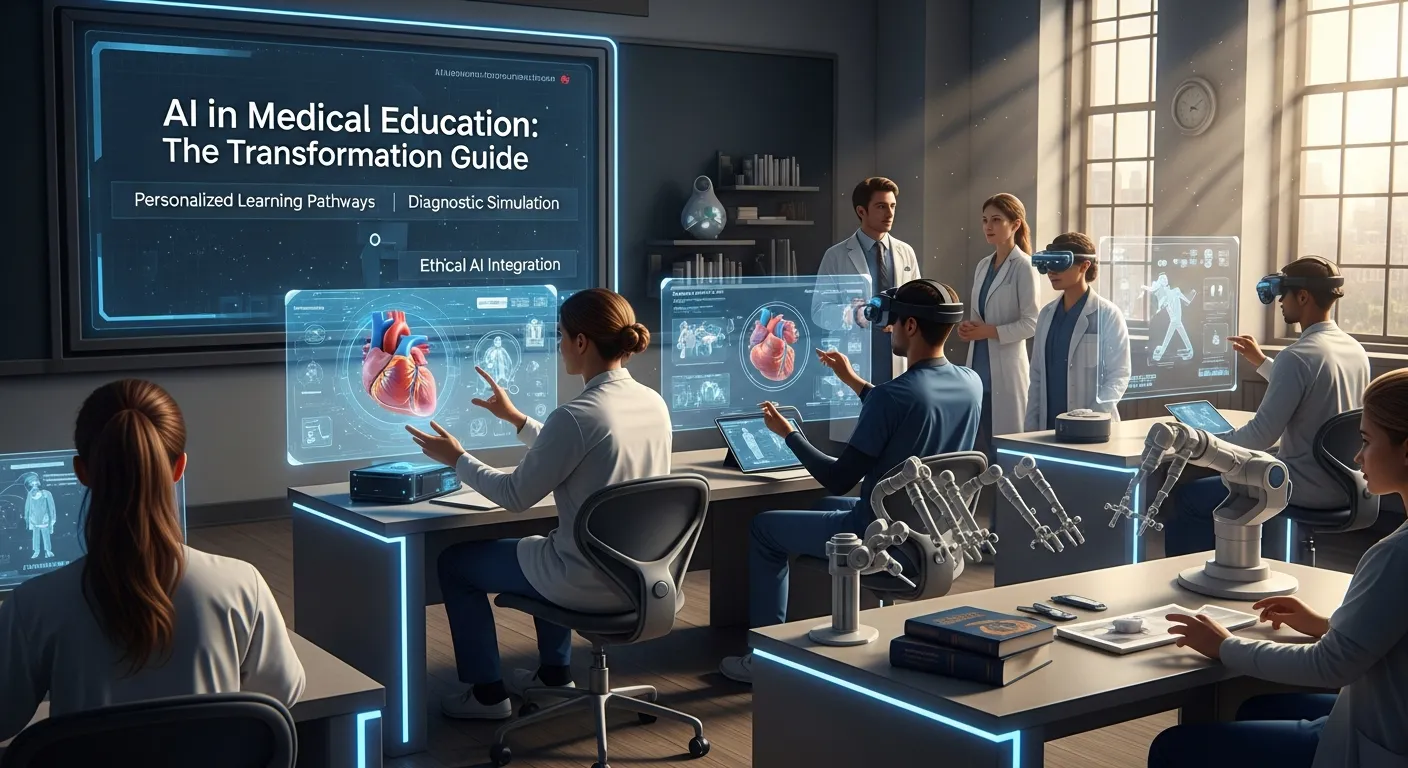
AI in medical education is transforming healthcare training through virtual simulations, predictive analytics, and adaptive learning systems. It improves student performance, supports early intervention for at-risk learners, and enhances clinical decision-making skills. As adoption expands beyond 2026, AI will continue to enable personalized learning, lifelong education, and more advanced, efficient medical training systems worldwide.
Artificial intelligence is rapidly shifting from a futuristic concept to a fundamental component of professional training across various sectors. Aviation, engineering, and finance have already embraced machine learning and adaptive algorithms to enhance safety and efficiency. However, nowhere is this technological shift more critical than in healthcare training.
For decades, the journey to becoming a physician relied heavily on massive textbooks, static lectures, and the luck of the draw during clinical rotations. Students absorbed vast amounts of information, hoping to encounter the right mix of patient cases to solidify their practical skills. This traditional model, while historically effective, struggles to keep pace with the exponential growth of modern scientific data.
As we look at the current state of healthcare, a new paradigm is clearly emerging. Medical institutions are recognizing that the sheer volume of diagnostic protocols, pharmaceutical advancements, and treatment methodologies exceeds human memorization capacity. Future doctors need dynamic, responsive training environments that adapt to their unique learning needs and continuously challenge their clinical reasoning.
This is exactly why AI in medical education is not just another digital tool or passing trend. It is a profound, transformative force that is completely reshaping how institutions prepare the next generation of healthcare professionals. By integrating intelligent systems, medical schools are moving away from passive instruction and actively cultivating a highly adaptable, critically thinking medical workforce.
The Current Landscape of Medical Education: Challenges and Opportunities
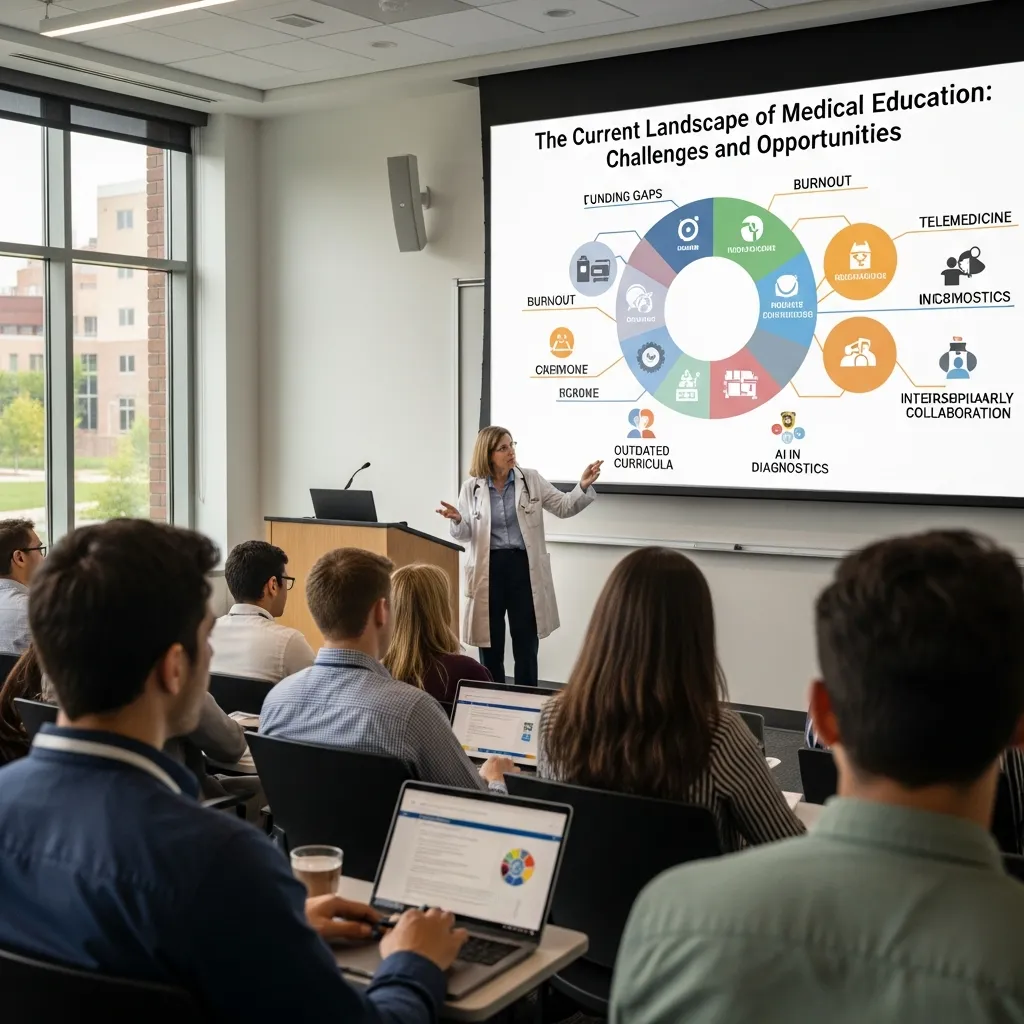 The traditional medical education system faces several structural limitations. Resource constraints remain a significant hurdle for many institutions. High-fidelity physical simulators, cadaver labs, and extensive faculty mentorship require massive financial investments. Consequently, many programs rely on static learning models that force all students through the exact same curriculum at the exact same pace, regardless of their individual strengths or weaknesses.
This lack of personalized training often leads to inefficiencies. A student who excels in cardiovascular physiology might be forced to sit through redundant lectures, while another who struggles with neuroanatomy might not receive the targeted support they need before exam day. Furthermore, physical clinical rotations limit exposure based on geographic location and current patient admissions. A student in a rural clinic might never see a rare autoimmune disorder, leaving a gap in their practical experience.
AI in medical education serves as a powerful solution to these longstanding challenges. By leveraging machine learning, educators can bypass the limitations of physical resources and static curricula. Intelligent systems can analyze a student’s performance data in real-time, identifying knowledge gaps and instantly adjusting the learning material to address those specific areas. This sets the stage for a much more efficient, equitable, and comprehensive training environment. For a broader look at how digital tools are changing the field, explore this medical education technology guide.
Key Areas of AI Transformation in Medical Education
The integration of artificial intelligence is currently unfolding across several critical areas of medical training, each addressing specific pedagogical needs.
Personalized Learning Paths
Adaptive algorithms have revolutionized the way medical curricula are delivered. Instead of a one-size-fits-all syllabus, students now engage with customized learning paths. If an assessment reveals a misunderstanding of renal function, the AI system automatically routes the student to supplementary modules, interactive diagrams, and targeted quiz questions. This ensures complete mastery of foundational concepts before the student advances to more complex clinical applications.
Virtual and Augmented Reality Simulations
Combining AI with virtual reality (VR) and augmented reality (AR) creates immersive, risk-free training environments. Students can perform complex surgical procedures on virtual avatars that react realistically to surgical errors. The AI monitors the student’s hand movements, precision, and decision-making speed, offering immediate corrective feedback. This allows for extensive hands-on training without any risk to human patients.
AI-Powered Diagnostics and Treatment Planning
Understanding how to use AI tools is becoming a clinical skill in itself. Medical students are now trained alongside AI diagnostic assistants. These tools analyze medical imaging, lab results, and patient histories, presenting probable diagnoses. Students learn to evaluate the AI’s recommendations, cross-reference them with their clinical judgment, and formulate comprehensive treatment plans. This collaborative approach prepares them for a future where AI is a standard clinic companion.
Automated Assessment and Feedback
Evaluating student performance has historically been subjective and incredibly time-consuming for faculty. AI in medical education introduces efficiency and strict objectivity to student evaluation. Natural language processing algorithms can assess written case notes, while simulation trackers evaluate practical skills. Students receive instant, detailed feedback on their performance, allowing them to correct mistakes immediately rather than waiting weeks for a professor’s grade.
Research and Development
AI plays a crucial role in accelerating medical discoveries and integrating those findings directly into the classroom. Machine learning models analyze vast datasets from clinical trials to identify new disease markers or drug interactions. Educational AI systems then update the curriculum automatically with these latest findings. To understand how these trials form the basis of medical knowledge, you can review how clinical trials are explained and integrated into modern healthcare.
Benefits of Integrating AI in Medical Education
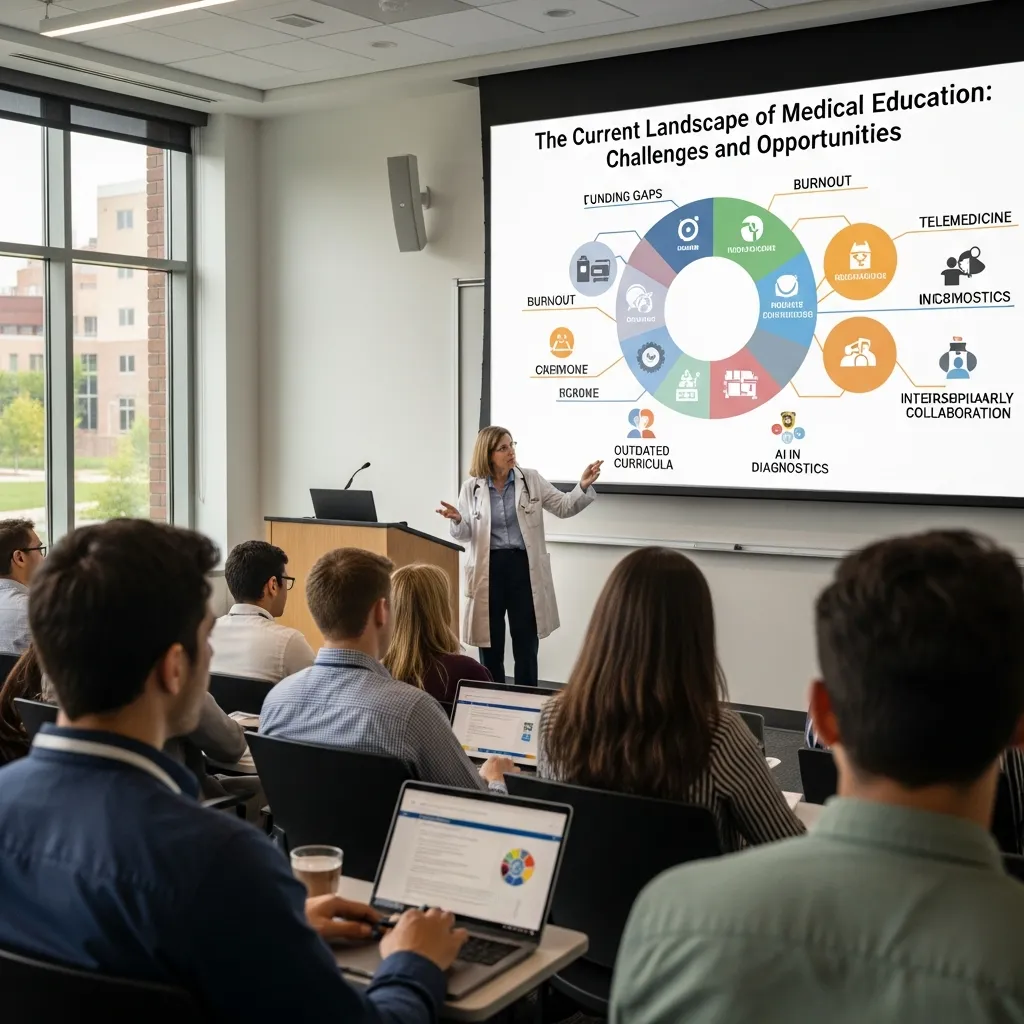 The shift toward intelligent educational systems offers profound advantages for students, educators, and ultimately, patients.
Enhanced Learning Outcomes
When students learn at their own optimal pace and receive targeted support, their understanding deepens. AI in medical education promotes active recall and spaced repetition, techniques scientifically proven to improve long-term memory retention. This means students carry a stronger foundational knowledge base into their clinical practice.
Increased Efficiency and Accessibility
Digital learning platforms powered by AI democratize medical knowledge. High-quality, adaptive education is no longer restricted to elite, heavily funded institutions. Cloud-based AI tutors and virtual simulations can be accessed globally, providing rigorous training to students in remote or underserved areas. Organizations like the World Health Organization (WHO) consistently highlight the need for improved global health training, a goal that AI makes highly achievable.
Preparation for Future Healthcare
The medical field of 2026 relies heavily on data and digital infrastructure. By integrating AI into their training, students become fluent in the technologies they will use every day in hospitals. They learn the strengths and limitations of machine learning, equipping them with the essential skills required for an AI-driven medical landscape.
Cost-Effectiveness
While developing AI platforms requires a substantial initial investment, the long-term savings are remarkable. Virtual labs reduce the need for physical medical supplies and expensive simulation mannequins. Automated grading and tutoring free up faculty time, allowing institutions to optimize their educational budgets and allocate resources more effectively.
Addressing Concerns and Ethical Considerations
Despite the obvious benefits, deploying AI in medical education requires careful navigation of several ethical and structural concerns.
Data Privacy and Security
Adaptive learning systems rely on vast amounts of student data, including test scores, learning habits, and behavioral biometrics. Safeguarding this sensitive information is paramount. Institutions must implement robust cybersecurity measures and transparent data governance policies to prevent unauthorized access and ensure compliance with global privacy regulations.
Bias in AI Algorithms
Machine learning models are only as objective as the data used to train them. If an AI system is trained on medical case studies that lack diverse demographic representation, it may develop biases. This can lead to skewed diagnostic training or unfair assessments of student performance. Developers and educators must continuously audit these algorithms to ensure absolute fairness and equity in AI applications.
The Role of Human Educators
Some fear that AI might replace human professors. However, the true function of AI in medical education is to augment human instruction, not eliminate it. Educators are evolving from primary information providers into facilitators and mentors. With AI handling rote memorization and basic assessment, professors can focus on teaching empathy, complex ethical reasoning, and bedside manner—qualities no machine can replicate. For deeper insights into modern pedagogical strategies, consider reviewing this modern learning guide.
Over-reliance on Technology
There is a valid concern that students might become overly dependent on AI diagnostic tools, potentially dulling their independent clinical reasoning. Medical programs must strike a careful balance. Students must be trained to use AI as a supportive resource while maintaining sharp critical thinking skills. They must know how to proceed confidently if the technology fails or provides contradictory information.
 Across the globe, forward-thinking institutions are already demonstrating the transformative power of AI in medical education. Medical schools and teaching hospitals are integrating intelligent systems not only to teach but also to simulate real clinical environments with remarkable accuracy.
AI in medical education is transforming how future healthcare professionals are trained by introducing smarter, more personalized, and interactive learning methods. From adaptive assessments to advanced VR simulations, these technologies are reshaping traditional teaching models and improving skill development. By integrating AI in medical education responsibly, institutions can enhance clinical competence, reduce learning gaps, and prepare more confident healthcare providers for the future.
