

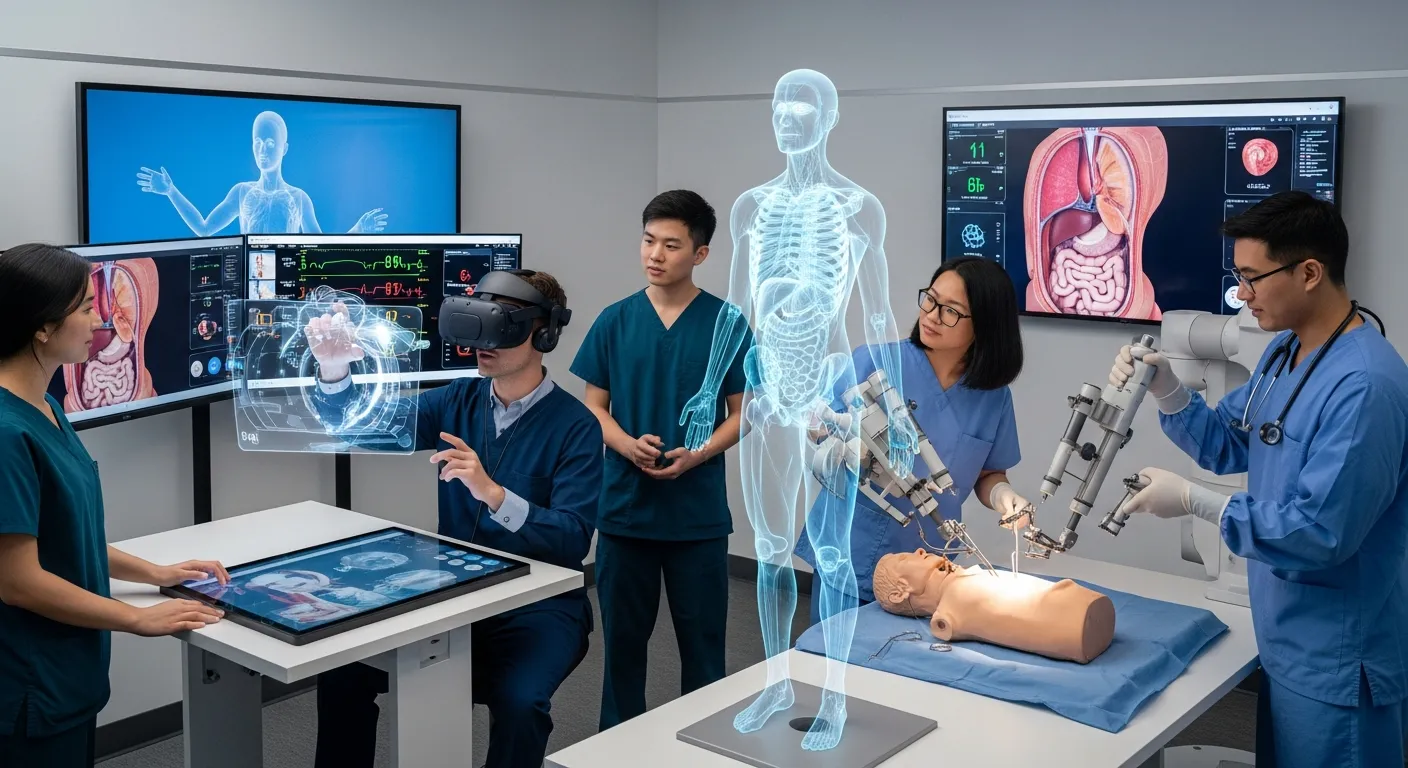
Medical education technology is transforming healthcare training through AI, virtual reality, simulation tools, and digital learning platforms. These innovations improve clinical skills, enhance student engagement, and provide more accessible, personalized, and efficient medical education for future healthcare professionals.
For centuries, training future physicians relied heavily on heavy textbooks, static diagrams, and the unpredictable nature of clinical rotations. Students spent countless hours in lecture halls absorbing vast amounts of theoretical knowledge, hoping to encounter the right mix of patient cases during their practical hours. This traditional approach built the foundation of modern healthcare, but it often left critical gaps in practical experience and personalized learning.
A profound shift is currently reshaping how we prepare healthcare professionals. Medical education technology has rapidly emerged as a fundamental component of clinical training. By replacing outdated methods with dynamic, digital learning environments, institutions are bridging the gap between classroom theory and real-world application. Students no longer have to wait for rare cases to arrive in the emergency room; they can simulate them safely and repeatedly.
The integration of medical education technology is not an optional upgrade for ambitious universities. It represents a necessary evolution. As medical knowledge expands exponentially, requiring students to memorize data using conventional methods is simply impractical. Future doctors and nurses need intelligent systems that adapt to their learning pace, identify their weaknesses, and challenge their clinical reasoning in real time.
By embracing these digital innovations, educational programs are fostering a higher standard of clinical excellence. This comprehensive transformation ensures that graduates step into hospitals with greater confidence, sharper diagnostic skills, and a deeper understanding of patient care.
The Evolving Landscape of Medical Training: Why Technology is Crucial
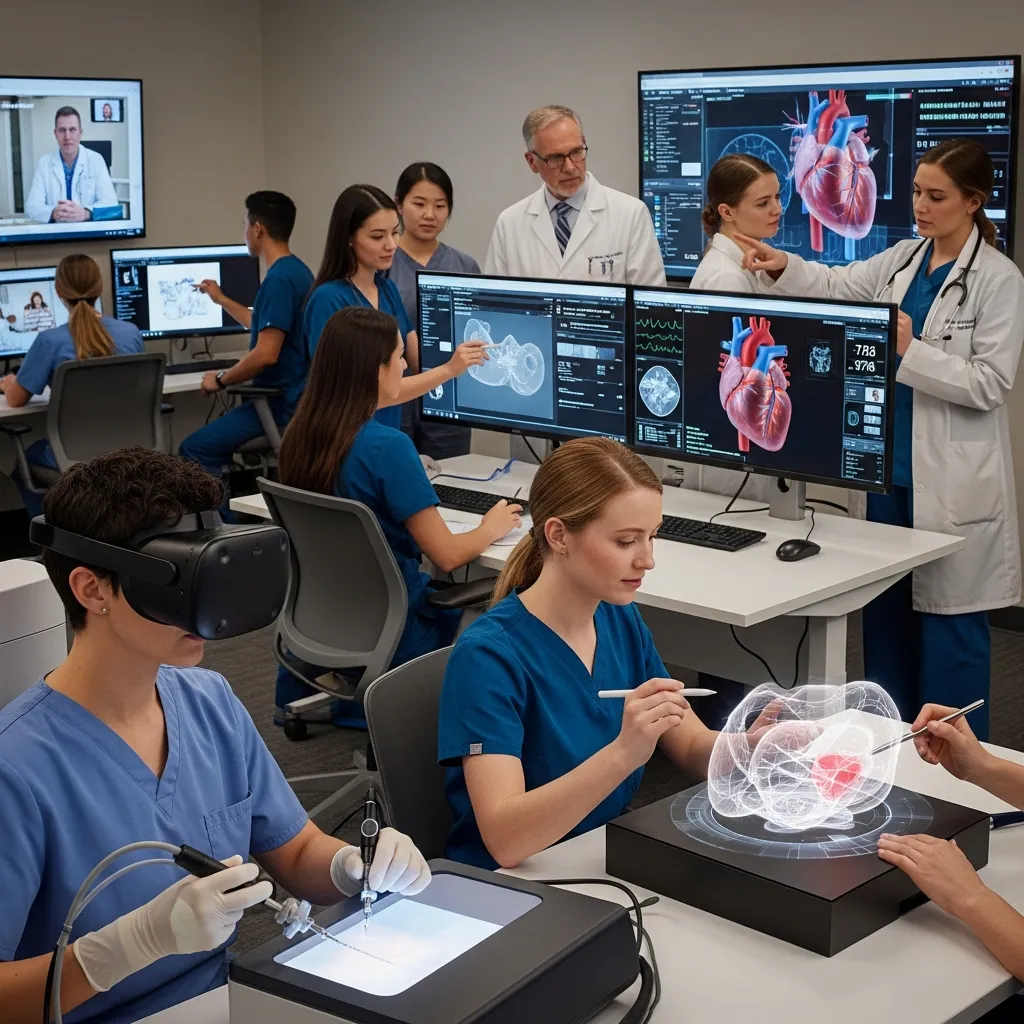 The healthcare industry demands precision, adaptability, and continuous improvement. Traditional educational models, which force all students through the exact same curriculum at the exact same pace, struggle to meet these demands. A student who excels in human anatomy might be forced to sit through redundant lectures, while another who struggles with pharmacology might not receive the targeted support they desperately need before final exams.
Medical education technology solves these structural inefficiencies. It provides educators with the tools to track student performance meticulously and tailor instruction to individual needs. Furthermore, physical clinical rotations often limit a student’s exposure based on geography. A medical student training in a rural clinic might never encounter a specialized neurological disorder. Digital platforms erase these geographic boundaries, granting every learner access to a vast, standardized library of clinical scenarios.
Key Technologies Driving Innovation in Medical Education
A variety of sophisticated digital tools now form the backbone of modern clinical curricula. These innovations provide safe, highly detailed environments for skill development.
Virtual Reality (VR) and Augmented Reality (AR): Immersive Learning Experiences
Virtual reality and augmented reality have completely redefined how students study human anatomy and practice surgical techniques. Through immersive VR headsets, learners can step into a lifelike digital operating room. They can practice intricate surgical procedures repeatedly without posing any risk to human patients. This repetition builds critical muscle memory and spatial awareness.
Augmented reality overlays digital information onto the physical world. A student looking at a medical mannequin through AR glasses can see a three-dimensional representation of internal organs functioning in real time. This interactive visualization helps learners understand complex spatial relationships far better than two-dimensional textbook images ever could.
Artificial Intelligence (AI) and Machine Learning: Personalized Pathways
Artificial intelligence does more than process large datasets; it customizes the educational journey for every individual student. Adaptive algorithms form the core of modern medical education technology, creating personalized learning pathways based on real-time performance. If an assessment reveals that a student misunderstands renal function, the AI system automatically routes them to supplementary modules and targeted quizzes.
You can learn more about how intelligent algorithms are reshaping healthcare instruction by exploring this detailed resource on AI in medical education training. These systems act as constant support networks, offering intelligent feedback that guides students through complex case studies and prompts critical thinking.
Simulation and Gamification: Hands-on Practice in a Safe Environment
High-fidelity simulation mannequins and digital clinical environments offer a safe space for students to practice high-stakes scenarios. Whether managing a sudden cardiac arrest or delivering a baby with complications, simulation training builds confidence under pressure.
Gamification further boosts learner engagement. By introducing elements like scoring, leaderboards, and achievement badges, medical programs create a healthy sense of competition. Students are much more likely to repeat a difficult diagnostic scenario multiple times if they are trying to beat their previous score or earn a specific digital credential.
Telemedicine and Remote Learning: Expanding Access
The rapid expansion of telehealth has fundamentally altered clinical practice, making remote learning platforms essential. Medical students now learn how to diagnose and consult with patients through video interfaces. This requires excellent digital communication skills and the ability to build patient rapport from a distance.
Additionally, remote learning platforms democratize medical knowledge. Students can attend massive open online courses and learn from leading experts at top universities globally. This continuous exchange of ideas strongly supports ongoing development, a concept deeply explored in discussions about lifelong learning in medical education.
Benefits of Integrating Medical Education Technology
The rapid adoption of these digital tools offers profound advantages for educational institutions, students, and the patients they will eventually treat.
Enhancing Engagement and Retention
Traditional rote memorization frequently fails to keep modern learners engaged. Interactive learning experiences capture attention and significantly improve long-term knowledge retention. When students actively participate in a virtual simulation, they engage multiple cognitive pathways. This active learning approach solidifies complex medical concepts more effectively than passive listening.
Improving Clinical Skills and Decision-Making
Evaluating a medical student’s competence has historically relied on subjective observation. Medical education technology introduces strict, data-driven performance evaluation. Simulation software tracks every action a student takes, from the exact dosage of medication administered to the precise angle of a surgical incision. This wealth of objective data allows instructors to pinpoint exactly where a student went wrong and provide specific, actionable feedback to improve their clinical decision-making.
Addressing Healthcare Disparities and Global Access
Digital platforms are bridging geographical gaps that previously restricted access to high-quality training. Students in underserved areas can now participate in advanced simulations and attend lectures led by global experts. Organizations like the World Health Organization heavily advocate for this democratization of medical knowledge to improve global health equity and standard of care.
Streamlining Curriculum Development and Assessment
Curricula can be updated instantly to reflect the latest medical guidelines and research findings. When pharmaceutical protocols change, digital materials receive immediate updates, ensuring students always learn the most current standards. This agility keeps medical education technology at the forefront of academic excellence.
Challenges and Considerations in Adopting Medical Education Technology
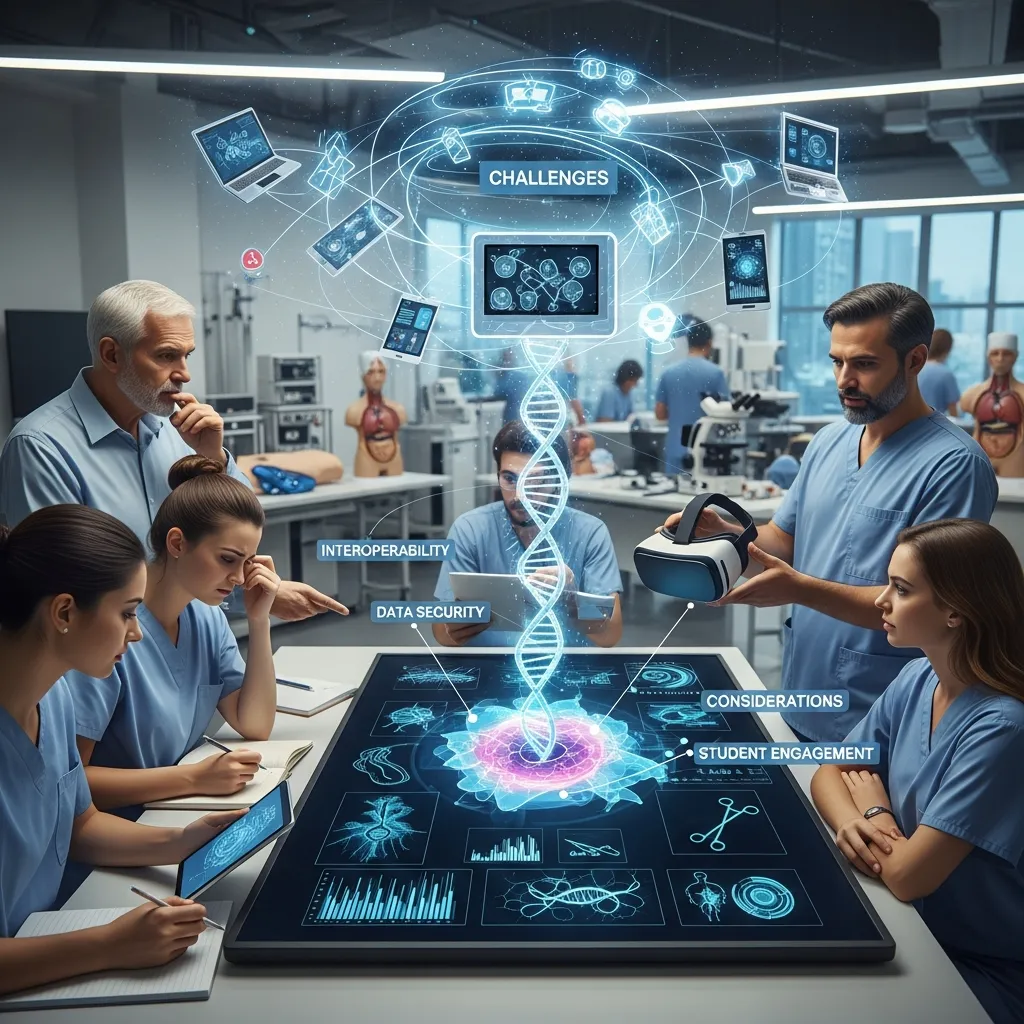 Despite the clear benefits, integrating these advanced systems comes with distinct challenges that institutions must navigate carefully to ensure successful adoption.
Cost and Infrastructure Requirements
Not all institutions have equal access to high-speed internet and expensive hardware. The initial financial investment required for VR labs, AI software licenses, and high-fidelity simulators is substantial. Institutions must invest heavily in their IT infrastructure to prevent a digital divide that could leave underfunded schools and their students behind.
Faculty Training and Adaptation
Technology is only effective if instructors know how to utilize it properly. Many seasoned educators are accustomed to traditional teaching methods and may resist adopting new digital platforms. Comprehensive faculty training programs are essential. Educators need dedicated time and support to transition their curricula into digital formats and learn how to interpret the complex data generated by simulation tools.
Ethical Considerations and Data Privacy
Medical education technology collects highly sensitive data, including student performance metrics and behavioral biometrics. Institutions must implement robust cybersecurity measures to protect this information from unauthorized access. Regular audits of AI algorithms are also necessary to prevent embedded biases that could unfairly assess student performance. Strict ethical frameworks, similar to those established by the National Institutes of Health, must govern data usage.
Ensuring Equity in Access
Medical schools must provide the necessary hardware and infrastructure to guarantee that all students, regardless of their socioeconomic background, can participate fully in remote learning and VR simulations. Creating on-campus digital resource centers helps level the playing field for all learners.
Case Studies: Real-World Applications of Medical Education Technology
Across the globe, forward-thinking universities are already demonstrating the transformative power of digital tools. Top-tier medical schools are utilizing advanced platforms that feature virtual patient avatars. These avatars exhibit dynamic symptoms based on the student’s verbal questioning and diagnostic approach. If a student administers the wrong medication, the virtual patient’s vitals deteriorate in real time, creating a high-pressure but entirely safe learning environment.
Other institutions rely on predictive analytics to monitor student well-being. By analyzing engagement metrics and quiz scores, AI systems identify students at risk of academic failure or burnout, allowing faculty to intervene early with targeted support. For a broader look at how institutions implement these tools effectively, you can review this medical education technology guide.
Furthermore, progressive teaching methodologies emphasize continuous assessment over final examinations. If you want to understand how pedagogy is shifting alongside software, reading a medical education modern learning guide provides excellent context on competency-based training.
The Future of Medical Education Technology: Trends and Predictions
The pace of innovation in healthcare training shows no signs of slowing down. Several emerging technologies promise to push the boundaries of clinical instruction even further.
Adaptive Learning Platforms
Future digital platforms will feature even more sophisticated adaptive learning algorithms. These systems will not only track quiz scores but also monitor a student’s cognitive load and focus during complex procedures. By analyzing these metrics, educational software will dynamically adjust the difficulty of a simulation in real time to keep the student in an optimal state of learning.
Integration of Wearable Devices and Biometric Feedback
The Internet of Things (IoT) and wearable technology offer unique ways to track clinical skills. Wearable devices are frequently used in simulated environments to monitor physiological responses during high-stress situations. Tracking a trainee’s heart rate and eye movements can reveal their stress levels, providing objective data to help them manage pressure better in real clinical settings.
Collaborative Global Medical Education Networks
Medical education technology is facilitating a new era of global collaboration. Future students from different countries will participate in shared virtual hospitals, treating simulated patients together while receiving real-time feedback. This shared experience will enhance clinical skills, improve cross-cultural communication, and accelerate the worldwide exchange of medical breakthroughs.
Embracing the Future of Medical Education with Technology
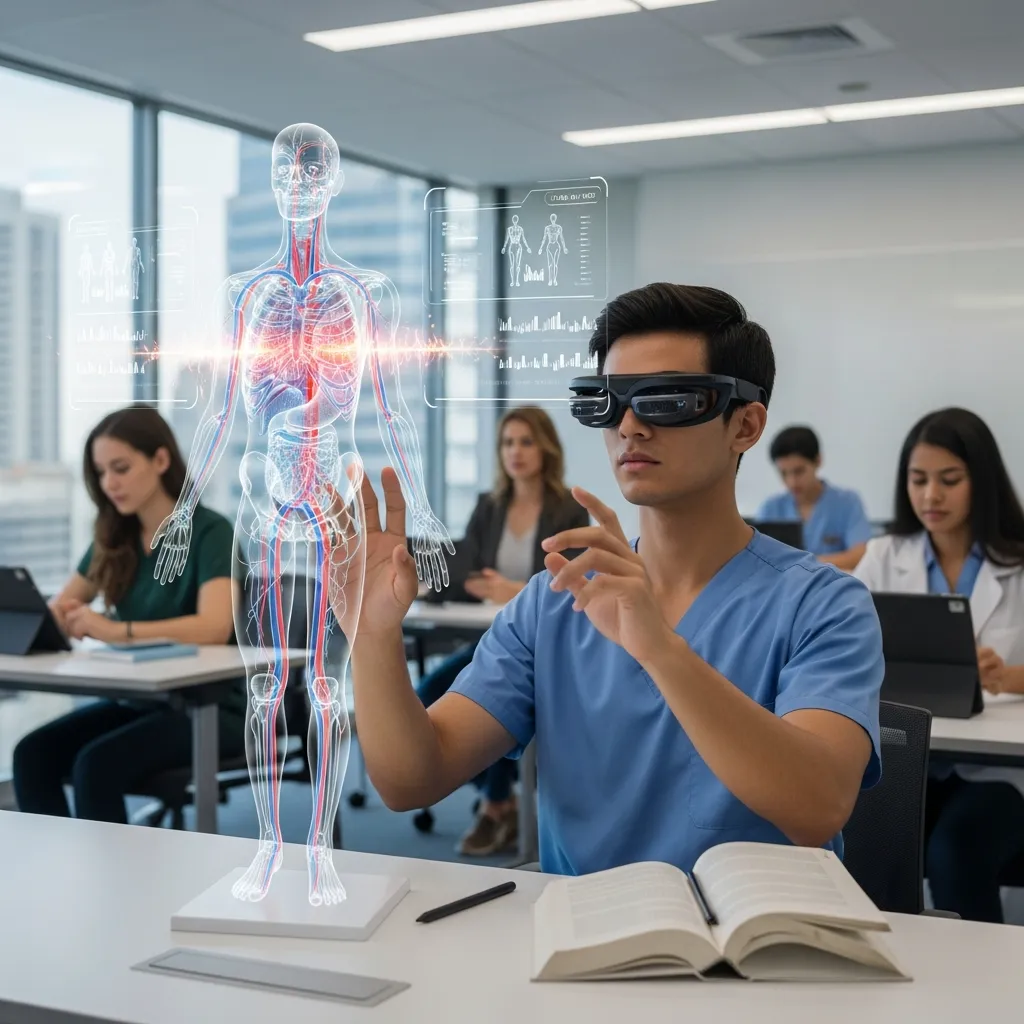 The architecture of clinical training is undergoing a remarkable and necessary redesign. By utilizing virtual reality, artificial intelligence, and adaptive e-learning platforms, educational institutions are providing instruction that is safer, more engaging, and highly personalized.
The successful future of medical training relies on a thoughtful balance. We must embrace these powerful digital tools while actively working to overcome barriers related to cost, infrastructure, and faculty adaptation. By committing to continuous innovation, the medical community will ensure that tomorrow’s physicians and nurses possess the exact skills, confidence, and adaptability needed to provide exceptional patient care. Medical education technology is no longer just a vision of the future; it is the vital foundation of modern healthcare training.
Conclusion
Medical education technology is reshaping the future of healthcare training by making learning more interactive, accessible, and effective. Innovations such as artificial intelligence, virtual reality, simulation-based learning, and online education platforms are helping medical students and professionals build stronger clinical skills with greater confidence. These advanced tools not only improve knowledge retention but also create safer training environments where learners can practice complex procedures without real-world risks.
As technology continues to evolve, healthcare education will become even more personalized and data-driven. Institutions that embrace digital transformation can better prepare future healthcare professionals for modern medical challenges. By combining traditional teaching methods with innovative technology, the medical field can ensure higher-quality education and improved patient care outcomes.
