
What is involved in Postgraduate Medical Education (PGME)?
After earning a medical degree, new doctors enter Postgraduate Medical Education (PGME). This phase is heavily practical and occurs within hospitals and clinics.
- Internships and Residencies: The first year of PGME is often called an internship. Residencies last between three and seven years, depending on the specialty. During this time, resident physicians manage patient care under the supervision of attending physicians.
- Fellowships and sub-specialization: Following residency, doctors may choose to complete a fellowship. Fellowships provide highly specialized training in fields like cardiology, oncology, or neurosurgery.
PGME solidifies the basic medical training concepts learned in medical school, transforming graduates into fully independent practitioners.
Why is simulation-based training essential for clinical skills?
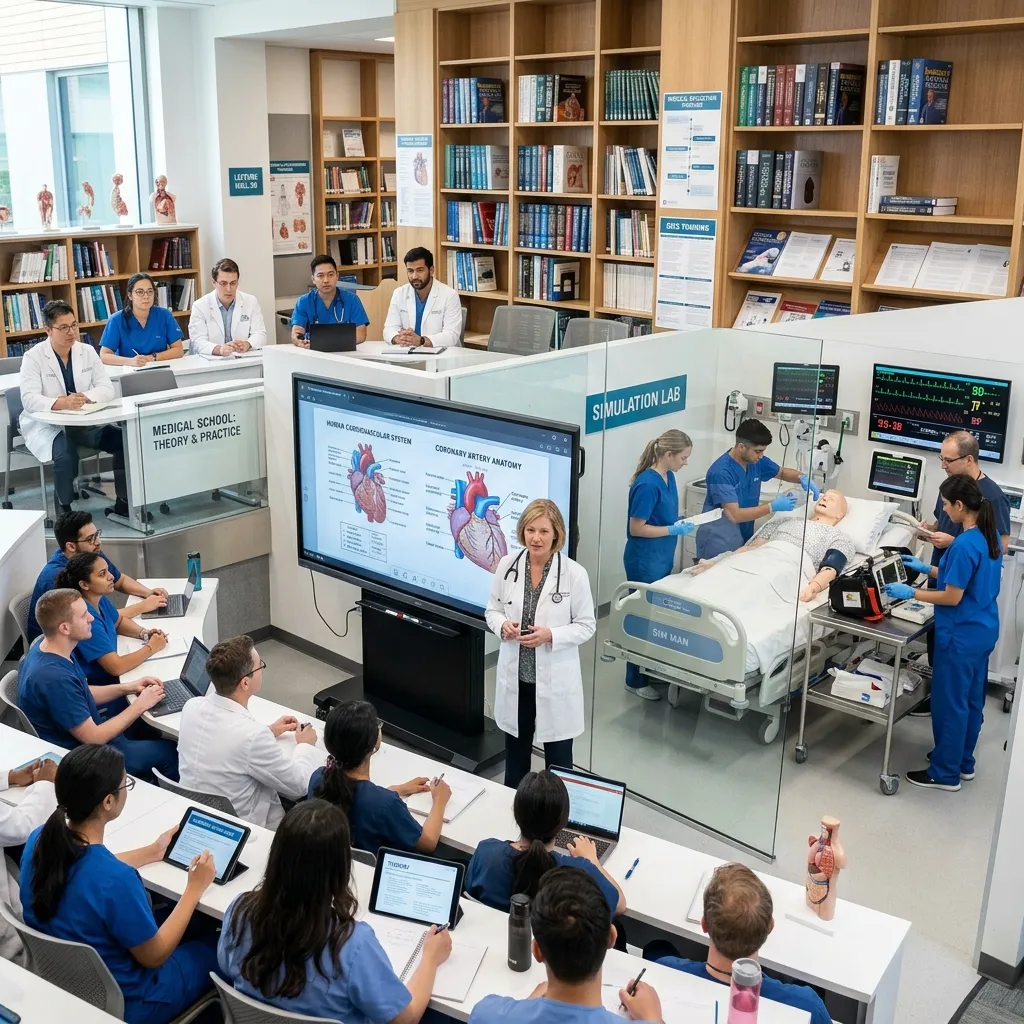
Simulation-based training allows medical students and residents to practice high-stakes procedures without putting actual patients at risk. Using high-fidelity mannequins, standardized patients (actors), and virtual reality environments, learners can rehearse emergency responses and complex surgeries. According to the Society for Simulation in Healthcare [SSH, 2023], simulation significantly reduces medical errors in real-world clinical settings (see the SSH guidelines).
Additionally, Interprofessional Education (IPE) often utilizes simulation. IPE brings medical, nursing, and pharmacy students together to practice teamwork and communication, mirroring the collaborative nature of modern healthcare.
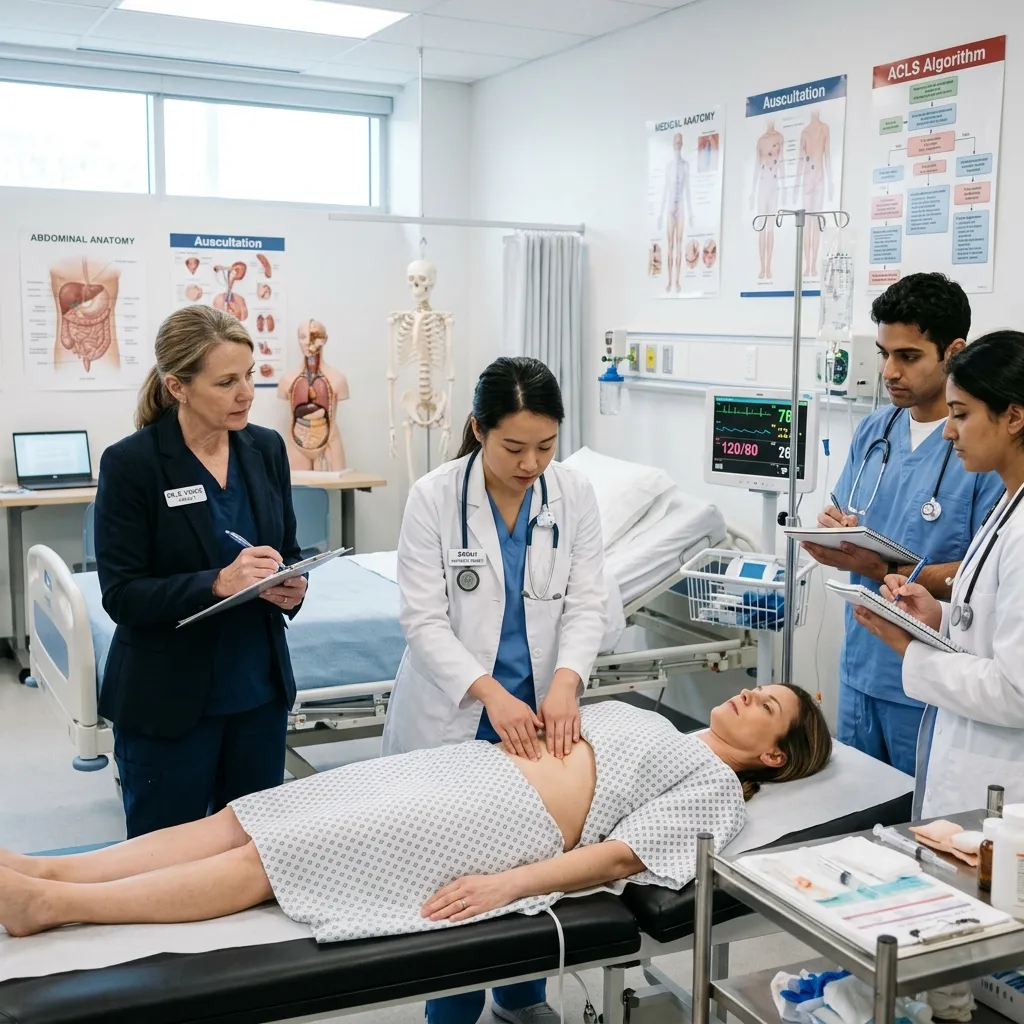
Integrating technology into the curriculum is a major priority. Artificial intelligence (AI), virtual reality (VR), and augmented reality (AR) are transforming how students learn anatomy and practice surgical techniques. AI-driven platforms can also personalize learning paths, identifying a student’s weak points and adjusting the curriculum accordingly. Read more about AI in medical education training to understand these digital shifts.
How do institutions address physician burnout and well-being?
Medical training is notoriously stressful. High rates of depression and burnout among medical students and residents have prompted a cultural shift within the introduction to medical education system. Institutions are now implementing wellness programs, strictly enforcing duty-hour limits for residents, and fostering supportive learning environments to protect mental health.
Why is promoting diversity, equity, and inclusion necessary?
Global perspectives on medical education highlight the need for a physician workforce that reflects the diverse patient populations it serves. Medical schools are actively revising admissions processes and curricula to promote diversity, equity, and inclusion. This ensures future doctors are trained to understand and dismantle health disparities, improving care for marginalized communities.
Why is continuous professional development crucial for doctors?
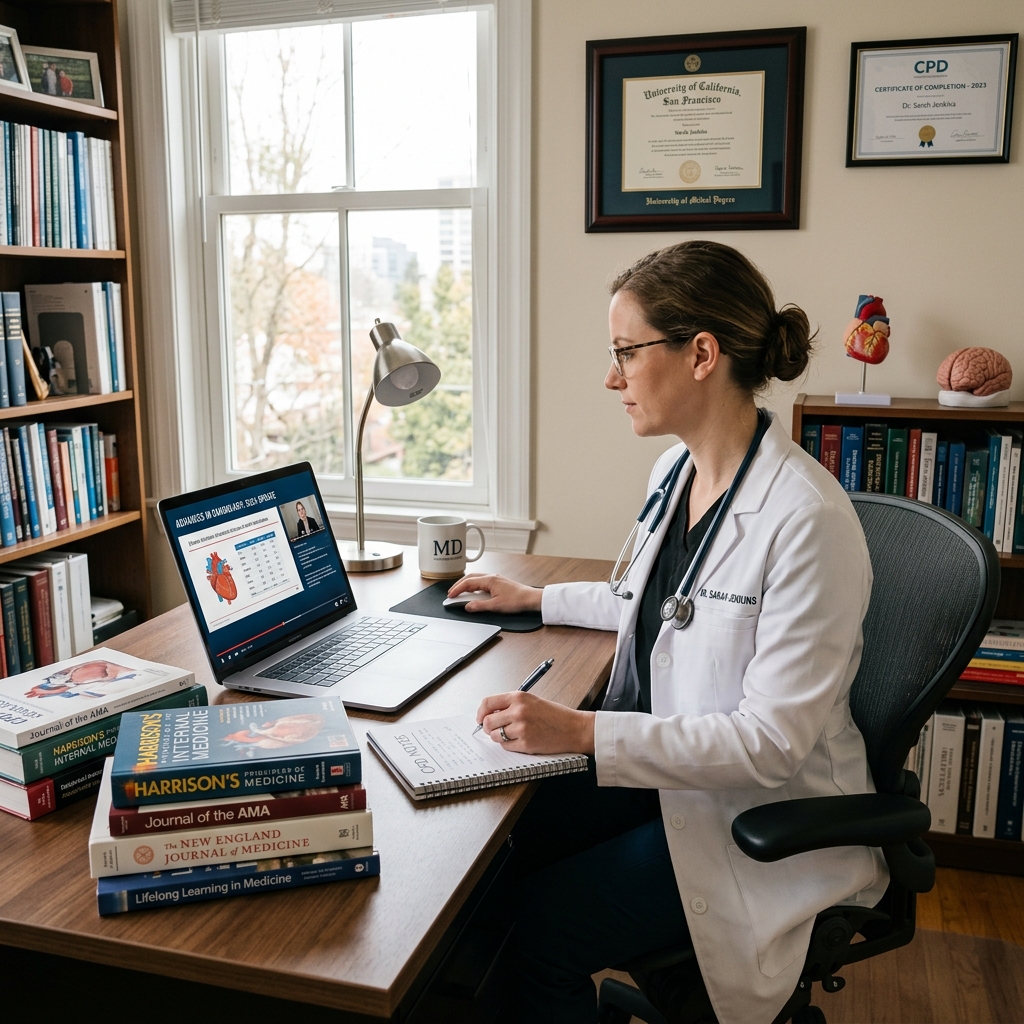 Medical education does not end when a doctor finishes residency. The role of continuous professional development (CPD) is a cornerstone of the medical profession.
The rapid pace of medical advancements means that clinical guidelines, pharmaceutical treatments, and diagnostic tools change frequently. Lifelong learning is necessary to keep pace with these developments. Physicians must complete Continuing Medical Education (CME) credits annually to maintain their state medical licenses and hospital privileges.
Furthermore, medical specialty boards require periodic re-certification. This ensures that a practicing surgeon or pediatrician remains competent in their specific field decades after their initial training. The importance of this ongoing education is further detailed in this guide to lifelong learning in medical education. The American Medical Association [AMA, 2024] clearly outlines CME requirements for practicing physicians across various states (visit the AMA website for specific criteria).
Conclusion
The fundamentals of medical education form the bedrock of a safe, effective healthcare system. From the demanding years of undergraduate medical education to the intensive clinical focus of residencies and fellowships, this rigorous pathway ensures that every licensed physician is prepared for the heavy responsibilities of patient care.
Looking forward, the future outlook for medical training points toward increased integration of digital health technologies, a stronger emphasis on physician well-being, and a shift toward competency-based advancement rather than strictly time-based graduation. By continually refining basic medical training concepts, educational institutions will successfully prepare the next generation of healthcare professionals to meet the complex medical challenges of tomorrow.
Frequently Asked Questions (FAQ)
1. What are the main stages of the medical education system?
The medical education system consists of pre-medical undergraduate studies, Undergraduate Medical Education (medical school), Postgraduate Medical Education (internship, residency, and fellowship), and Continuing Medical Education for practicing physicians.
2. How long does it take to complete medical education?
Becoming a fully licensed physician typically requires four years of undergraduate college, four years of medical school, and three to seven years of residency training, totaling 11 to 15 years of post-secondary education.
3. What is the difference between pre-clinical and clinical years?
During the pre-clinical years (usually years one and two of medical school), students focus on classroom and laboratory learning in foundational sciences. In the clinical years (years three and four), students work in hospitals and clinics directly interacting with patients under supervision.
4. Why are OSCEs important in basic medical training?
Objective Structured Clinical Examinations (OSCEs) are critical because they provide a standardized, objective way to evaluate a medical student’s practical clinical skills, communication abilities, and bedside manner in simulated patient encounters.
5. How does simulation-based training improve patient safety?
Simulation-based training allows medical learners to practice high-risk procedures and manage critical emergencies in a safe, controlled environment. This repetition builds muscle memory and clinical judgment, reducing the likelihood of errors when treating actual patients.
6. What is the purpose of a medical residency?
Residency provides intensive, supervised, hands-on clinical training in a specific medical specialty. It bridges the gap between the theoretical knowledge gained in medical school and the independent practice of medicine.
7. How is artificial intelligence changing the fundamentals of medical education?
Artificial intelligence transforms medical training by powering personalized learning algorithms, enhancing diagnostic training tools, and providing intelligent virtual patient simulations that adapt to a student’s clinical decisions in real-time.
8. What is Continuing Medical Education (CME)?
Continuing Medical Education (CME) consists of ongoing educational activities that practicing physicians must complete to maintain their medical licenses and board certifications, ensuring they stay current with the latest medical research and practices.
9. Why is interprofessional education (IPE) included in medical curricula?
IPE trains medical students alongside nursing, pharmacy, and allied health students to foster teamwork, improve communication, and break down professional silos, which ultimately leads to safer and more coordinated patient care.
10. How do medical schools address the challenge of student burnout?
Medical schools address burnout by implementing comprehensive wellness programs, providing accessible mental health resources, integrating pass/fail grading systems in early years to reduce harmful competition, and enforcing strict clinical duty-hour limits.
