

Close Menu

    Subscribe to Updates

    Get the latest creative news from FooBar about art, design and business.

    What's Hot

    Your Complete Guide to Common Diseases and Symptoms

    May 20, 2026

    Revolutionizing Training: Innovative Medical Education Strategies for Clinicians

    May 19, 2026

    The Complete Medical Diagnosis Guide for Better Patient Care

    May 19, 2026
    Facebook X (Twitter) Instagram
    My BlogMy Blog
    Facebook X (Twitter) Instagram
    • Homepage
    • About us
    • Contact us
    My BlogMy Blog
    Home»Medical Education»The Complete Medical Diagnosis Guide for Better Patient Care
    Medical Education

    The Complete Medical Diagnosis Guide for Better Patient Care

    adminBy adminMay 19, 2026Updated:May 19, 2026No Comments14 Mins Read
    Facebook Twitter Pinterest LinkedIn Tumblr Reddit WhatsApp Email
    Medical Diagnosis Guide
    Share
    Facebook Twitter LinkedIn Pinterest WhatsApp Email

    A Medical Diagnosis Guide helps explain how doctors identify diseases using patient symptoms, physical examinations, and diagnostic tests. It covers essential steps such as medical history review, laboratory testing, imaging techniques, and differential diagnosis to rule out possible conditions. This guide also highlights the importance of early detection, accurate interpretation of results, and the role of modern tools like AI and wearable technology in improving diagnostic accuracy and patient outcomes.
    A medical diagnosis guide involves a systematic evaluation using detailed patient history, physical examinations, and targeted diagnostic testing to identify health conditions accurately. Modern diagnostic processes increasingly rely on artificial intelligence, interdisciplinary collaboration, and telemedicine to reduce medical errors, personalize treatment plans, and ensure better patient outcomes in complex healthcare settings.

    Accurate diagnosis forms the bedrock of effective healthcare. Without a clear understanding of a patient’s underlying condition, even the most advanced treatments remain ineffective or potentially harmful. Every successful patient recovery begins with identifying the root cause of their symptoms. This process requires a meticulous blend of scientific knowledge, clinical experience, and empathetic communication.

    The landscape of healthcare evaluation is constantly shifting. Historically, physicians relied almost entirely on their physical senses and experience to identify ailments. Today, modern healthcare providers use highly sophisticated imaging, genetic profiling, and algorithmic data analysis. This evolution has made the diagnostic process more precise, but it has also added layers of complexity that both practitioners and patients must navigate.

    A comprehensive medical diagnosis guide helps bridge this complexity by breaking down how each stage of evaluation works—from initial symptom assessment to advanced confirmatory testing. It also emphasizes how timely decision-making and structured clinical reasoning reduce the risk of misdiagnosis and improve long-term health outcomes.

    Patients today play a more active role in their healthcare journey, and understanding a medical diagnosis guide empowers them to communicate symptoms more clearly, follow diagnostic instructions properly, and make informed decisions about treatment options. This collaboration between patient and healthcare provider is essential for achieving accurate results.

    This comprehensive medical diagnosis guide will cover the critical steps involved in identifying health conditions. We will explore the foundational pillars of clinical evaluation, the step-by-step cognitive process doctors use, and the common pitfalls that lead to diagnostic errors. Furthermore, this medical diagnosis guide examines how emerging technologies like artificial intelligence are reshaping clinical accuracy, improving early detection, and how patients can actively participate in their own healthcare journey for better outcomes.

    What are the foundational pillars of a medical diagnosis guide?

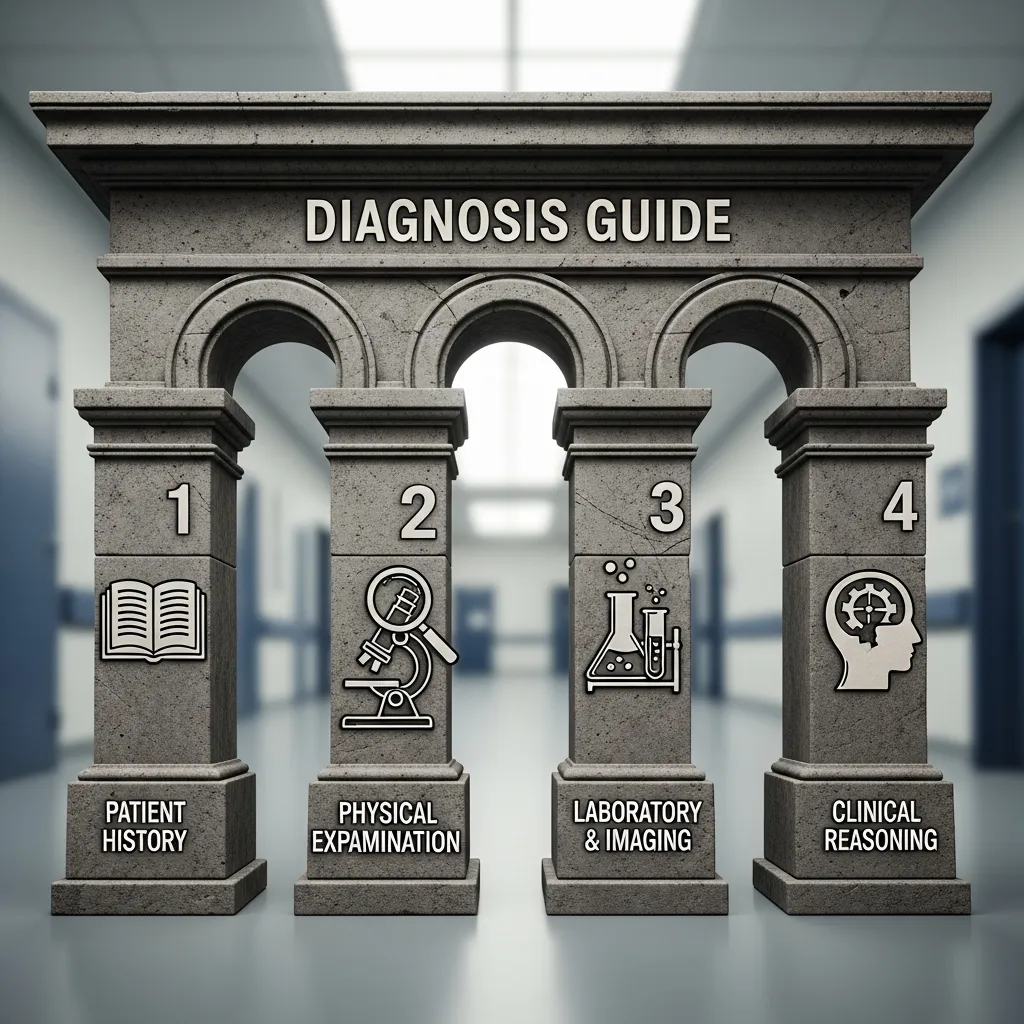
    Key steps of diagnosis processThe diagnostic process does not begin with an MRI or a blood test. It starts the moment a healthcare provider interacts with a patient. The foundational pillars of a reliable medical diagnosis guide rely on three sequential steps: patient history, physical examination, and diagnostic testing. Together, these pillars form a structured framework that ensures accuracy, reduces errors, and supports evidence-based decision-making in clinical practice.


    A well-structured medical diagnosis guide emphasizes that each pillar is interconnected. Findings from one step often guide the next, creating a continuous loop of observation, analysis, and confirmation. This systematic approach improves diagnostic precision and helps healthcare professionals avoid unnecessary or redundant testing.

    How does patient history provide the first diagnostic clue?

    The patient history is widely considered the most critical component of the diagnostic process. According to the World Health Organization (WHO, 2023), up to 70% of diagnoses can be made based on the patient’s history alone. Gathering this information requires comprehensive interview techniques. Physicians must ask open-ended questions to encourage patients to describe their symptoms in their own words, followed by closed-ended questions to pinpoint specific details like onset, duration, severity, and associated symptoms.

    A complete medical diagnosis guide always highlights patient history as the starting point because it reveals patterns that may not be immediately visible through tests. Active listening and empathy are just as important as the questions asked. A patient who feels heard is more likely to share sensitive or overlooked information that could be the key to solving a medical mystery. Healthcare providers must also observe non-verbal cues and validate the patient’s experiences to build trust and ensure accuracy.

    In modern practice, electronic health records (EHRs) further enhance this process by allowing clinicians to track long-term health trends, previous diagnoses, and medication responses, all of which strengthen the overall diagnostic framework outlined in a medical diagnosis guide.

    Why is the physical examination a crucial hands-on assessment?

    Once the history is recorded, the physician moves to the physical examination. This involves a systematic approach to evaluating the body. Practitioners typically follow a standard sequence: inspection (looking), palpation (feeling), percussion (tapping), and auscultation (listening with a stethoscope).

    A reliable medical diagnosis guide emphasizes that physical examination provides objective confirmation of subjective symptoms. Recognizing key clinical signs during this phase helps narrow down possible conditions. For example, hearing a specific type of heart murmur can point toward a valve disorder, while palpating an enlarged liver may suggest metabolic or infectious disease. Skin changes, reflex abnormalities, and vital signs also provide critical diagnostic clues.

    The physical exam bridges the gap between patient-reported symptoms and measurable clinical evidence. It remains a cornerstone of clinical reasoning even in an era dominated by advanced imaging and laboratory technology, reinforcing its importance in any medical diagnosis guide.

    What role does diagnostic testing play in unveiling hidden health information?

    When history and physical exams are not enough to confirm a condition, healthcare providers turn to diagnostic testing. These tools uncover hidden biological and structural information that cannot be observed directly.

    A comprehensive medical diagnosis guide categorizes diagnostic testing into three major groups:

    Laboratory tests, including blood work, urinalysis, and tissue biopsies, provide biochemical and cellular data that reveal infections, deficiencies, or organ dysfunction.

    Imaging studies such as X-rays, Magnetic Resonance Imaging (MRI), Computed Tomography (CT) scans, and ultrasounds allow clinicians to visualize internal structures without invasive procedures. Each modality serves a specific purpose depending on clinical needs—for example, MRI is preferred for soft tissue evaluation, while CT scans are more effective for rapid assessment of trauma.

    Electro-diagnostic tests like Electrocardiograms (ECG) and Electroencephalograms (EEG) measure electrical activity in the heart and brain, helping detect arrhythmias, seizures, and neurological abnormalities.

    Modern advancements such as artificial intelligence-assisted imaging analysis and predictive algorithms are increasingly integrated into the medical diagnosis guide framework, improving speed, accuracy, and early disease detection.

    Ultimately, diagnostic testing serves as the final confirmation step in the medical diagnosis guide, ensuring that clinical decisions are based on precise, data-driven evidence rather than assumptions.

    How does the step-by-step diagnostic process work?

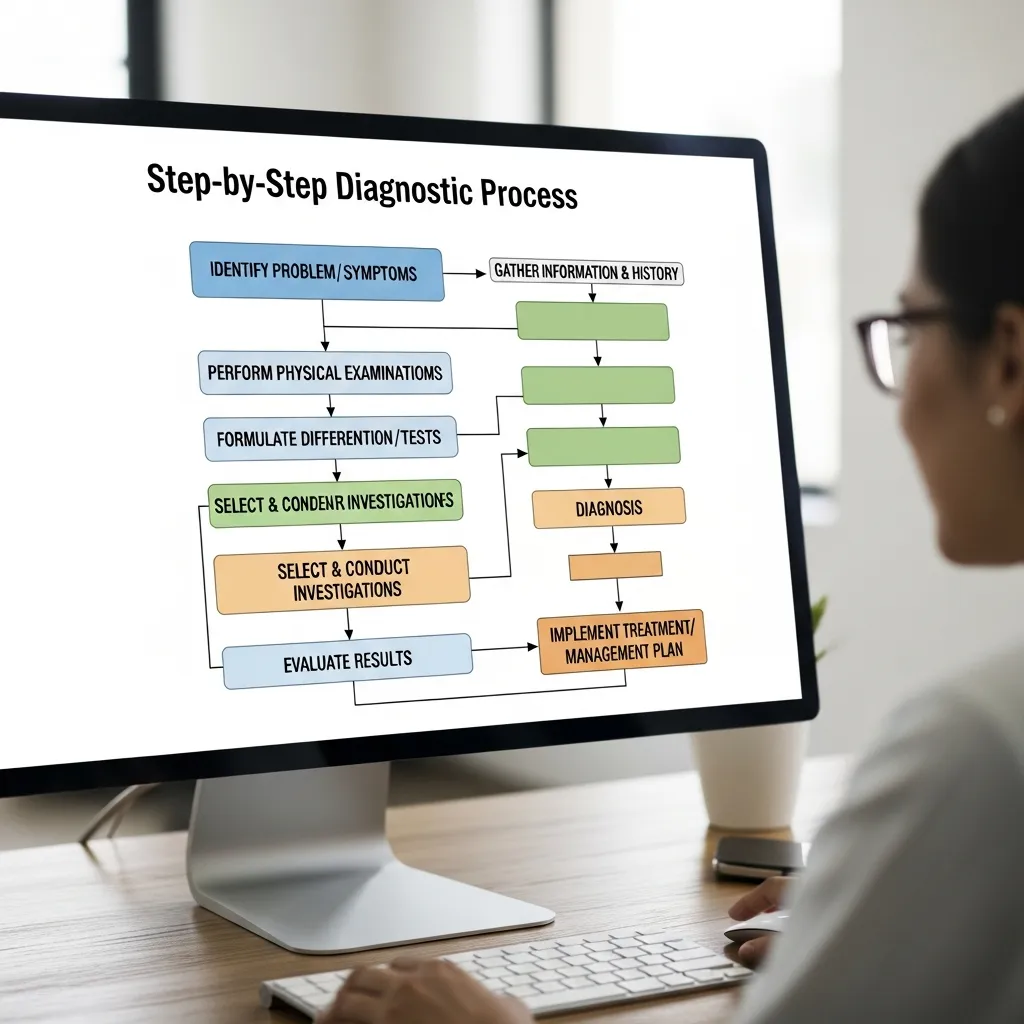
    Medical diagnosis process overviewFollowing a structured medical diagnosis guide helps clinicians organize their thoughts and avoid jumping to premature conclusions. The diagnostic process is highly iterative, meaning doctors continuously update their thinking as new information arrives.

    How do doctors form a differential diagnosis?

    After gathering the initial clues, the physician creates a differential diagnosis. This involves brainstorming a list of potential conditions that could explain the patient’s symptoms. A patient presenting with chest pain, for example, might have a differential diagnosis that includes a myocardial infarction (heart attack), gastroesophageal reflux disease (GERD), a pulmonary embolism, or severe anxiety.

    Once the list is generated, the physician prioritizes these conditions based on probability and severity. They must rule out life-threatening conditions first, even if they are less common, to ensure patient safety.

    What methods help refine the diagnosis with further information?

    To narrow down the differential list, physicians use targeted testing. Instead of ordering every available blood test, a clinician following a strong medical diagnosis guide will order specific tests designed to confirm or eliminate the top conditions on their list.

    In complex cases, refining the diagnosis requires consulting specialists. A primary care physician might refer a patient with unusual joint pain to a rheumatologist. This interdisciplinary collaboration ensures that experts with deep, specific knowledge review the patient’s symptoms.

    How do healthcare professionals confirm the final diagnosis?

    Confirming the diagnosis often relies on the role of definitive tests. A definitive test is one that provides a conclusive answer, such as a tissue biopsy showing cancer cells or a genetic test revealing a specific mutation.

    Once confirmed, communicating the diagnosis to the patient is the final, crucial step. Physicians must explain the condition clearly, avoiding medical jargon, and outline the available treatment options. Clear communication ensures the patient understands their health status and feels prepared to begin treatment.

    What are the main challenges and pitfalls in medical diagnosis?

    Even with a rigorous medical diagnosis guide, the evaluation process is not foolproof. Diagnostic errors happen, and understanding their root causes is essential for improving patient safety.

    What causes diagnostic errors and what are their consequences?

    Diagnostic errors usually stem from a combination of cognitive biases and systemic factors. Cognitive biases occur when a physician’s thought process is flawed. For example, “anchoring bias” happens when a doctor relies too heavily on the first piece of information they receive, ignoring subsequent clues that point in a different direction.

    Systemic factors include issues within the healthcare environment itself. Heavy workloads, extreme time pressures, poor communication between departments, and flawed electronic health records all contribute to mistakes. The consequences of these errors can be severe, leading to delayed treatments, unnecessary procedures, or patient harm.

    Why do rare diseases often result in a diagnostic odyssey?

    Patients with rare diseases frequently experience a “diagnostic odyssey”—a prolonged period of seeing multiple specialists and undergoing countless tests without a clear answer. Because these conditions are uncommon, many physicians may never encounter them during their entire careers. According to the National Institutes of Health (NIH, 2022), it takes an average of five to seven years for a patient with a rare disease to receive an accurate diagnosis.

    How do co-morbidities impact the diagnostic process?

    The impact of co-morbidities—when a patient has two or more chronic conditions simultaneously—adds significant complexity to any medical diagnosis guide. Symptoms of one disease can mask or mimic the symptoms of another. For instance, diagnosing a new respiratory infection is much harder in a patient who already suffers from chronic obstructive pulmonary disease (COPD) and congestive heart failure.

    How will technology shape the future medical diagnosis guide?

    The future of clinical evaluation is inextricably linked to technological advancement. Innovations are providing clinicians with better data, faster analysis, and more personalized treatment criteria.

    How are artificial intelligence and machine learning enhancing diagnosis?

    Artificial intelligence (AI) and machine learning algorithms can analyze vast datasets far faster than the human brain. AI pattern recognition tools are currently used to detect subtle anomalies in radiology scans, often spotting early-stage tumors that escape the human eye.

    Furthermore, training future physicians to use these tools relies heavily on integrating AI in medical education training. By teaching students how to collaborate with AI diagnostic assistants, institutions are ensuring that the next generation of doctors can blend algorithmic precision with human empathy.

    What is the impact of telemedicine and remote diagnostics?

    Telemedicine has revolutionized access to healthcare, allowing patients to consult with specialists regardless of geographic barriers. Remote diagnostics now include wearable technology that tracks a patient’s heart rate, oxygen levels, and sleep patterns continuously. This real-time data allows physicians to diagnose intermittent conditions, like cardiac arrhythmias, that might not occur during a standard 15-minute office visit. Integrating these devices into daily practice is a major focus of transforming medical education technology.

    How do precision medicine and genomics personalize healthcare?

    Precision medicine moves away from a one-size-fits-all approach by using a patient’s genetic profile to guide diagnosis and treatment. Genomics can identify specific genetic mutations that predispose a patient to certain diseases, allowing for earlier and more accurate diagnoses. This approach ensures that patients receive treatments tailored specifically to their biological makeup, improving efficacy and reducing side effects.

    What is the patient’s role in their medical diagnosis guide journey?

    Patient role in diagnosisA medical diagnosis guide is not just a tool for doctors; it requires active participation from the patient. Healthcare is a collaborative effort, and the accuracy of a diagnosis heavily depends on the patient’s engagement.

    How can patients effectively advocate for themselves?

    Advocating for oneself means taking an active role in the diagnostic process. Patients should come to appointments prepared with a written list of symptoms, a timeline of when they started, and a complete history of past medical issues and current medications. If a diagnosis does not make sense or a treatment is not working, patients must feel empowered to ask questions or seek a second opinion.

    Why is effective communication essential for accurate diagnosis?

    Effective communication is a two-way street. Patients must be honest about their lifestyle habits, including diet, alcohol consumption, and stress levels, even if it feels uncomfortable. Withholding information can lead a physician down the wrong diagnostic path. By establishing an open, honest dialogue, patients ensure their healthcare providers have the complete picture needed to arrive at the correct conclusion. Engaging in lifelong learning in medical education helps providers maintain the communication skills necessary to foster this patient trust.

    Next steps for mastering the medical diagnosis guide

    Understanding the intricacies of a medical diagnosis guide empowers both healthcare providers and patients. By recognizing the importance of detailed patient histories, systematic physical exams, and the proper use of diagnostic technology, we can drastically reduce diagnostic errors.

    For healthcare professionals, committing to continuous education and adapting to new technologies like AI and genomic testing is non-negotiable. For patients, embracing self-advocacy and open communication ensures you remain a vital partner in your own healthcare journey. As medicine continues to evolve, a collaborative, informed approach to diagnosis will always be the most effective path to healing.

    Conclusion

    A Medical Diagnosis Guide plays a crucial role in helping patients and healthcare providers understand the structured process of identifying diseases accurately. From reviewing symptoms and medical history to conducting laboratory tests and advanced imaging, each step ensures that the correct condition is identified and treated effectively. With the support of modern technologies such as AI and wearable devices, diagnostic accuracy continues to improve, leading to faster detection and better patient outcomes. By understanding the diagnostic process, patients can actively participate in their healthcare journey and make informed decisions for better long-term health.

    Frequently Asked Questions

    1. What is a differential diagnosis in medicine?

    A differential diagnosis is a list of possible conditions or diseases that could be causing a patient’s symptoms. Doctors use this list to systematically rule out incorrect conditions through targeted testing until the true cause is identified.

    2. How does artificial intelligence improve diagnostic accuracy?

    Artificial intelligence improves diagnostic accuracy by quickly analyzing large sets of medical data, such as X-rays and patient records, to recognize complex patterns. It helps doctors spot early signs of disease that might be too subtle for the human eye to detect.

    3. Why do some medical diagnoses take so long?

    Some diagnoses take a long time because the patient’s symptoms may be vague, mimic other common illnesses, or point to a rare disease. In these cases, doctors must conduct a series of specialized tests and consult with various experts to find the correct answer.

    4. What should a patient bring to a diagnostic appointment?

    A patient should bring a detailed timeline of their symptoms, a complete list of current medications and supplements, their family medical history, and any previous medical records or test results relevant to their current condition.

    5. How can wearable technology assist in medical diagnosis?

    Wearable technology, such as smartwatches, tracks continuous physiological data like heart rate and sleep patterns. This provides doctors with real-world, long-term health metrics that help diagnose intermittent conditions that might not show up during a brief clinic visit.

    6. What role does early diagnosis play in treatment success?

    Early diagnosis allows doctors to start treatment before a condition worsens, improving outcomes and reducing the risk of complications or long-term damage.

    7. Can lifestyle habits affect diagnostic results?

    Yes, factors like diet, stress, sleep, and medication use can influence test results and may sometimes mask or exaggerate symptoms during diagnosis.

    8. How important is patient communication in diagnosis?

    Clear and honest communication helps doctors understand symptoms accurately, leading to faster and more precise diagnosis.

    9. What is the difference between screening and diagnosis?

    Screening identifies potential health risks in asymptomatic individuals, while diagnosis confirms the presence of a specific disease based on detailed testing.

    10. Why might multiple tests be needed for one condition?

    Some diseases share similar symptoms, so multiple tests are needed to rule out other conditions and ensure an accurate diagnosis.

    Clinical Diagnosis Diagnostic Process Disease Diagnosis Medical Diagnosis Medical Diagnosis Guide
    admin
    • Website

    Related Posts

    Your Complete Guide to Common Diseases and Symptoms

    May 20, 2026

    Revolutionizing Training: Innovative Medical Education Strategies for Clinicians

    May 19, 2026

    How Medical Education Technology is Transforming Training

    May 18, 2026
    Leave A Reply Cancel Reply

    Our Picks

    Your Complete Guide to Common Diseases and Symptoms

    May 20, 2026

    Revolutionizing Training: Innovative Medical Education Strategies for Clinicians

    May 19, 2026

    The Complete Medical Diagnosis Guide for Better Patient Care

    May 19, 2026

    How Medical Education Technology is Transforming Training

    May 18, 2026
    Stay In Touch
    • Facebook
    • Twitter
    • Pinterest
    • Instagram
    • YouTube
    • Vimeo
    Facebook X (Twitter) Instagram Pinterest
    • About us
    • Contact us
    • Privacy Policy
    • Terms and Conditions
    © 2026 Theclinicalchannel. All Rights Reserved.

    Type above and press Enter to search. Press Esc to cancel.