
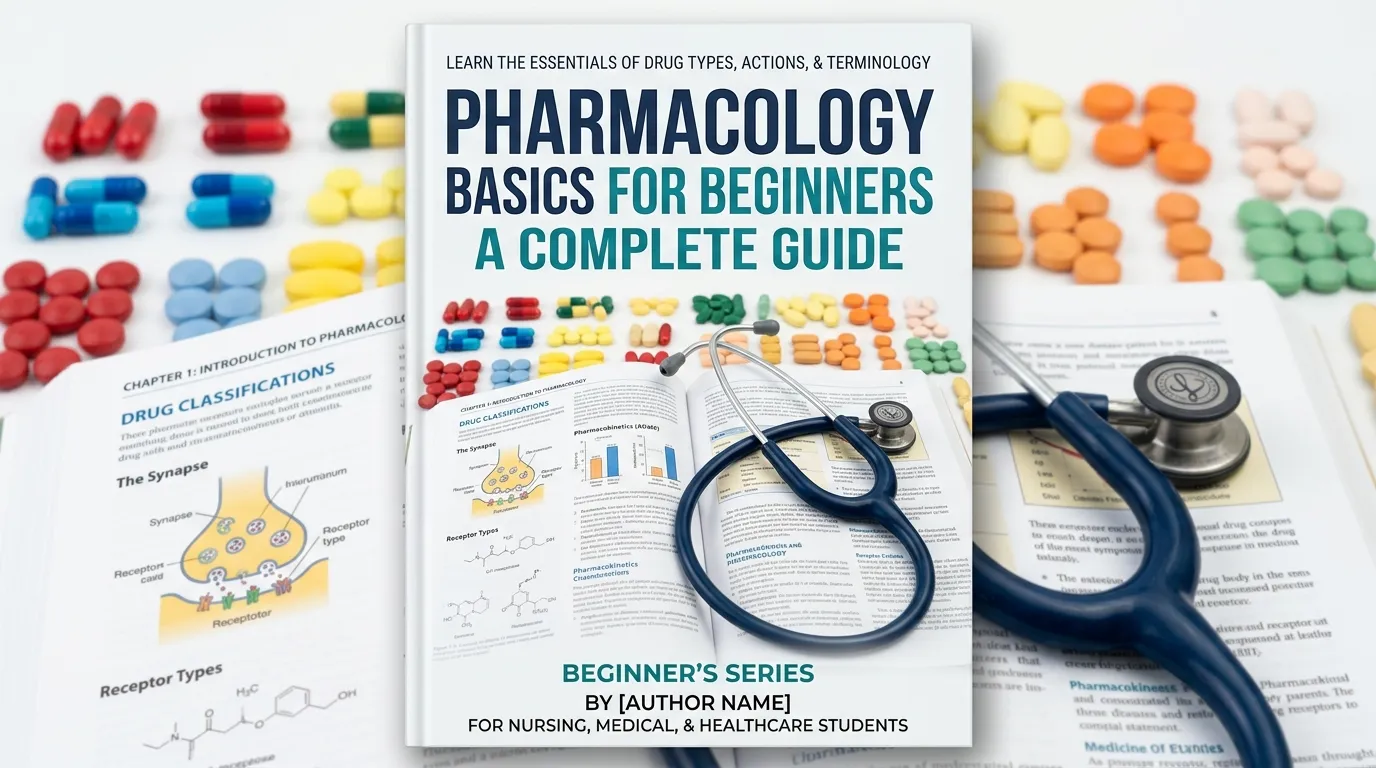
Pharmacology basics for beginners introduces the essential principles of how medicines work, including drug actions, dosage, absorption, metabolism, and safety. Understanding these basic pharmacology concepts builds a strong foundation for students, healthcare professionals, and anyone interested in medication science.
Pharmacology basics for beginners starts with understanding how drugs interact with the body. This introduction to pharmacology focuses on two core ideas: pharmacodynamics (how drugs affect the body) and pharmacokinetics (how the body processes drugs through absorption, distribution, metabolism, and excretion). Mastering these basic pharmacology concepts builds the foundation for safe, effective medication use.
Every pill, injection, or patch you’ve ever used works because of pharmacology. This science explains why one drug relieves a headache, another lowers blood pressure, and a third fights infection. Understanding the basics doesn’t require a medical degree—it simply requires a clear starting point. That’s why pharmacology for beginners is an essential topic for students and anyone interested in healthcare.
Pharmacology sits at the heart of modern medicine. Doctors, nurses, and pharmacists rely on it daily to choose the right drug, the right dose, and the right timing for each patient. But you don’t have to work in healthcare to benefit. Knowing how medications work helps you take them safely, recognize potential side effects, understand drug interactions, and ask informed questions about your treatment.
This introduction to pharmacology walks you through everything a beginner needs to know. You’ll learn how drugs affect the body, how the body processes medications, how drugs are named and classified, and how they enter your system. We’ll also explore drug interactions, medication safety, special patient populations, and the role pharmacology plays in developing new treatments.
Whether you’re a nursing student, a pre-med learner, a pharmacy student, or simply curious about how medicines work, this guide on pharmacology basics for beginners provides a clear, practical foundation. By understanding these basic pharmacology concepts, you’ll be better prepared to use medications safely and continue building your knowledge of modern healthcare.
What Is Pharmacology and Why Does It Matter?
 Pharmacology is the scientific study of how drugs interact with living systems. The word comes from the Greek pharmakon, meaning “drug” or “poison,” and logia, meaning “study.” That dual meaning is fitting—almost every drug can heal at one dose and harm at another.
Pharmacology splits into two major branches. Pharmacodynamics studies what a drug does to the body, while pharmacokinetics studies what the body does to a drug. Together, these basic pharmacology concepts explain the full journey of any medication, from the moment it enters your system to the effect it produces.
Why Should Beginners Learn Basic Pharmacology Concepts?
Pharmacology matters for different people in different ways:
- For healthcare students: Pharmacology is a core subject in medicine, nursing, and pharmacy. You cannot prescribe, administer, or monitor medications safely without it. Strong drug knowledge supports the clinical skills medical students build throughout training.
- For patients and caregivers: Understanding how your medications work helps you take them correctly, spot side effects early, and avoid dangerous combinations.
- For general knowledge: Pharmacology helps you make sense of health news, prescription labels, and the advice your doctor gives.
Pharmacology turns a confusing world of drug names and warnings into a logical system. Once you grasp the basics, the rest becomes far easier to follow.
Who Can Benefit From Understanding Pharmacology for Beginners?
Almost everyone gains something from an introduction to pharmacology. Students preparing for exams need it as a foundation. Working professionals use it to refresh their knowledge. Patients managing chronic conditions like diabetes or high blood pressure benefit from understanding their daily medications. Even fitness enthusiasts and curious learners find value in knowing how supplements and common drugs affect the body.
How Do Drugs Affect the Body? (Pharmacodynamics)
Pharmacodynamics describes the effects a drug produces and the mechanism behind those effects. In simple terms, it answers the question: what does this drug do once it’s inside you?
What Are Receptors and Ligands?
Most drugs work by attaching to specific targets called receptors. A receptor is a protein, usually on the surface of a cell, that recognizes a particular molecule. The molecule that binds to it is called a ligand. Think of it like a lock and key—the receptor is the lock, and the ligand is the key that fits it.
When a drug binds to its receptor, it triggers a response inside the cell. This response might speed up a process, slow it down, or block it entirely. The precise fit between drug and receptor explains why one medication treats a specific condition while leaving others untouched.
What Is the Difference Between Agonists and Antagonists?
Drugs that bind to receptors fall into two main groups:
- Agonists activate a receptor to produce a response. They mimic the body’s natural signaling molecules. Morphine, for example, is an agonist that activates opioid receptors to relieve pain.
- Antagonists block a receptor, preventing it from being activated. They produce no effect on their own but stop other molecules from working. Beta-blockers, used for heart conditions, are antagonists that block adrenaline’s effects.
Understanding this difference is one of the most important basic pharmacology concepts. It explains why some drugs trigger an effect while others prevent one.
What Is the Dose-Response Relationship?
The dose-response relationship describes how the size of a drug dose affects the strength of its response. Generally, a higher dose produces a stronger effect—up to a point.
Two key terms help describe this:
- Potency refers to how much drug you need to produce a given effect. A potent drug works at a small dose.
- Efficacy refers to the maximum effect a drug can produce, no matter how much you give.
Every drug also has a “therapeutic window”—the range between the dose that helps and the dose that harms. A wide window means a drug is relatively safe. A narrow window, like that of the blood thinner warfarin, means small dosing errors can be dangerous.
How Does the Body Process Drugs? (Pharmacokinetics and ADME)
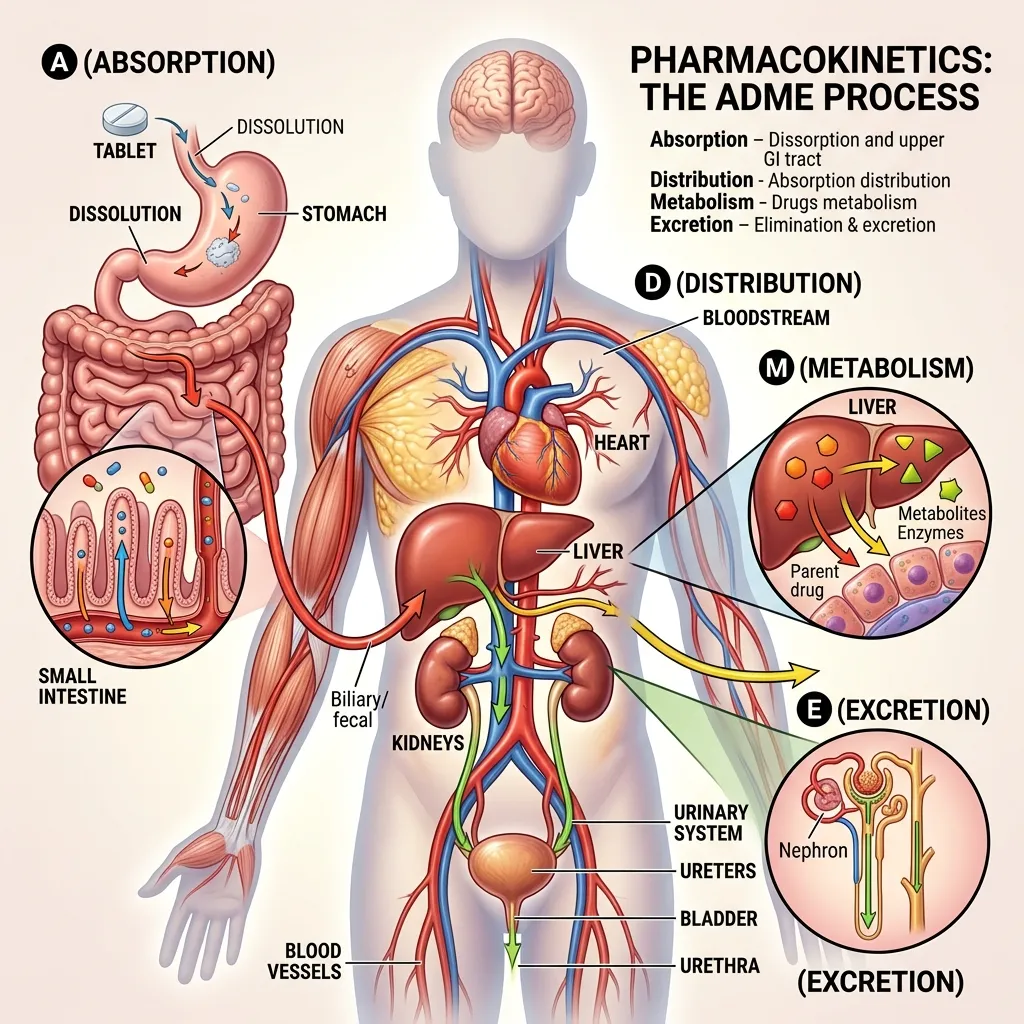 Pharmacokinetics studies how the body handles a drug over time. It follows four stages, easily remembered by the acronym ADME: Absorption, Distribution, Metabolism, and Excretion. Understanding ADME is central to any introduction to pharmacology.
How Are Drugs Absorbed?
Absorption is how a drug enters the bloodstream from its site of administration. A swallowed pill must pass through the stomach and intestinal walls before reaching the blood. Several factors affect absorption, including the drug’s form, the route of administration, and whether you’ve eaten.
A key concept here is bioavailability—the fraction of a drug that actually reaches the bloodstream unchanged. A drug injected into a vein has 100% bioavailability, while a swallowed tablet often has much less, since some is lost during digestion.
How Are Drugs Distributed?
Once in the blood, a drug travels throughout the body—a process called distribution. The drug must leave the bloodstream and reach its target tissue to work. Distribution depends on blood flow, the drug’s ability to cross cell membranes, and how strongly it binds to proteins in the blood.
Some areas, like the brain, are harder to reach because of protective barriers such as the blood-brain barrier. This is why certain drugs treat the body effectively but cannot affect the brain.
How Are Drugs Metabolized?
Metabolism is how the body chemically changes a drug, usually breaking it down into a form that’s easier to remove. The liver does most of this work using specialized enzymes. Metabolism often deactivates a drug, but in some cases it activates a “prodrug” into its working form.
Because the liver is so central to metabolism, liver health strongly affects how drugs behave. People with liver disease may process drugs slowly, leading to a buildup that increases side effects.
How Are Drugs Excreted?
Excretion is the final removal of a drug from the body. The kidneys handle most excretion, filtering drugs and their byproducts into urine. Other routes include the bile, sweat, breath, and breast milk.
A useful concept here is “half-life”—the time it takes for the drug concentration in the blood to fall by half. Half-life helps doctors decide how often a patient should take a medication.
How Are Drugs Named and Classified?
With thousands of medications available, a clear naming and classification system is essential. This is one of the more practical basic pharmacology concepts for everyday life.
What Is the Difference Between Generic and Brand Names?
Every drug has at least two names. The generic name is the official, scientific name, the same worldwide. The brand name is the trademarked name a company gives its version of the drug. For example, the generic drug acetaminophen is sold under the brand name Tylenol.
Generic versions usually cost less than brand-name drugs but contain the same active ingredient and work the same way. Knowing both names helps you avoid accidentally taking the same drug twice under different labels.
How Are Drug Classes Organized?
Drugs are grouped into classes based on shared features—often their mechanism of action or the condition they treat.
Common drug classes include:
- Analgesics: Relieve pain (e.g., ibuprofen, morphine).
- Antibiotics: Fight bacterial infections (e.g., amoxicillin).
- Antihypertensives: Lower blood pressure (e.g., beta-blockers, ACE inhibitors).
- Antidepressants: Treat mood disorders (e.g., SSRIs).
- Anticoagulants: Prevent blood clots (e.g., warfarin, heparin).
Learning drugs by class is far easier than memorizing them one by one, because drugs in the same class often share similar effects and side effects.
What Are the Routes of Drug Administration?
The route of administration is how a drug enters the body. The choice affects how fast the drug works, how much reaches the bloodstream, and how long the effect lasts.
How Does Oral Administration Work?
Oral administration—swallowing a pill, capsule, or liquid—is the most common and convenient route. It’s safe, painless, and inexpensive. The downside is speed: the drug must travel through the digestive system before it works, which takes time. Stomach acid and food can also reduce how much drug is absorbed.
How Does Intravenous (IV) Administration Work?
Intravenous (IV) administration delivers a drug directly into a vein. This route is the fastest, producing an almost immediate effect with 100% bioavailability. IV is ideal for emergencies and for drugs that can’t survive the digestive system. The trade-off is that it requires trained staff and carries a higher risk of infection or dosing error.
What Are the Other Routes of Administration?
Several other routes suit different needs:
- Topical: Applied to the skin (creams, ointments) for local effects.
- Intramuscular (IM): Injected into muscle, offering steady absorption (many vaccines use this route).
- Subcutaneous (SC): Injected into the fatty layer under the skin, used for insulin and some other drugs.
- Inhalation: Breathed into the lungs, ideal for asthma inhalers.
- Sublingual: Dissolved under the tongue for rapid absorption.
What Are Drug Interactions and Side Effects?
 No drug is perfectly selective. Most produce effects beyond their intended target, and many interact with other substances. Understanding these risks is a vital part of pharmacology for beginners.
What Are the Main Types of Drug Interactions?
A drug interaction occurs when one substance changes the way another works.
The main types include:
- Drug-drug interactions: One medication alters the effect of another. For example, some antibiotics reduce the effectiveness of birth control pills.
- Drug-food interactions: Food or drink changes how a drug behaves. Grapefruit juice, for instance, can dangerously raise the levels of certain medications.
- Drug-disease interactions: An existing condition makes a drug riskier, such as a decongestant raising blood pressure in someone with hypertension.
What Are Common Side Effects and Adverse Drug Reactions?
A side effect is an unwanted effect that occurs alongside the intended one. Many are mild and predictable—drowsiness from antihistamines, nausea from antibiotics, or dry mouth from certain pills.
An adverse drug reaction (ADR) is more serious and can cause real harm. Severe allergic reactions, organ damage, or dangerous drops in blood pressure all count as ADRs. Reporting and monitoring these reactions is a major focus of drug safety, and it links closely to broader patient care guidelines used in clinical settings.
What Are the Special Considerations in Pharmacology?
Drugs don’t affect everyone equally. Age, pregnancy, and other factors change how a body handles medication, so dosing must adapt.
How Does Pediatric Pharmacology Differ?
Children are not just small adults. Their organs, especially the liver and kidneys, are still developing, which changes how they process drugs. Doses are usually calculated by body weight, and some drugs safe for adults are unsafe for children. Careful adjustment prevents both under-dosing and toxicity.
How Does Geriatric Pharmacology Differ?
Older adults often process drugs more slowly because kidney and liver function naturally decline with age. They also tend to take multiple medications at once—a situation called polypharmacy—which raises the risk of interactions. Lower doses and careful monitoring help keep older patients safe.
How Does Pharmacology Change During Pregnancy and Lactation?
During pregnancy, drugs can cross the placenta and affect the developing baby. Some are known to cause birth defects and must be avoided. During breastfeeding, certain drugs pass into breast milk and reach the infant. For both stages, doctors weigh the benefit to the mother against the risk to the child before prescribing.
What Role Does Pharmacology Play in Healthcare?
Beyond individual treatment, pharmacology drives the discovery and development of every new medicine. This field connects laboratory science with real-world patient care.
How Are New Drugs Discovered and Developed?
Drug discovery begins with identifying a target—often a receptor or enzyme involved in a disease. Scientists then design or screen molecules that might affect that target. Promising candidates undergo years of laboratory and animal testing before they ever reach a human. The process is long, expensive, and carries a high failure rate.
How Do Clinical Trials and Drug Approval Work?
Before a drug reaches the market, it must pass clinical trials—carefully controlled studies in humans. These trials run in phases, starting with small safety tests and expanding to large studies that confirm effectiveness. Regulatory agencies like the U.S. Food and Drug Administration (FDA) review the results before approving a drug. To learn more about how these studies are structured, see our guide on what clinical research involves.
What Is Personalized Medicine?
Personalized medicine tailors drug treatment to an individual’s genetic makeup. Because genes influence how people respond to medications, genetic testing can help doctors choose the right drug and dose for each patient. This growing field, known as pharmacogenomics, promises safer and more effective treatment with fewer side effects.
Mastering Pharmacology for Beginners
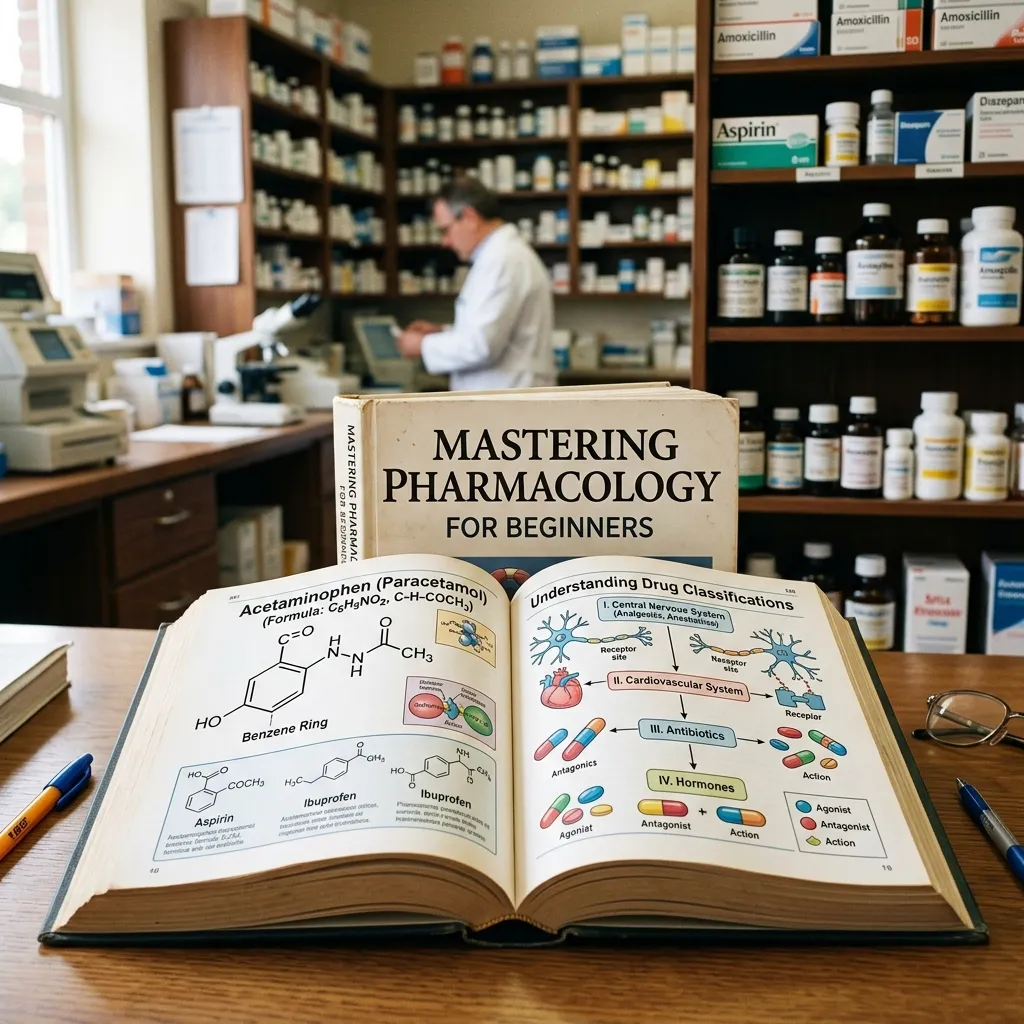 The basics of pharmacology come down to a few core ideas: drugs affect the body through pharmacodynamics, the body processes drugs through pharmacokinetics (ADME), medications are named and classified for clarity, and special groups need careful dosing. Master these foundations, and you’ll have the framework to understand almost any topic in drug therapy.
Start small. Pick one concept this week—maybe the difference between agonists and antagonists, or the four stages of ADME—and learn it thoroughly. Then move to the next. Connect each idea to a real drug you recognize, and the subject will quickly come to life. Pairing this with strong study habits, like those in our guide on how to study medicine effectively, makes the learning even smoother.
Pharmacology is the gateway to understanding modern medicine. The foundation you build today will support everything you learn tomorrow. For trusted, in-depth references, explore resources from the U.S. Food and Drug Administration (FDA) and the National Library of Medicine, both of which offer excellent introductions to pharmacology for beginners.
Conclusion
Learning pharmacology basics for beginners is the first step toward understanding how medications prevent, treat, and manage disease. By mastering basic pharmacology concepts, including drug mechanisms, pharmacokinetics, pharmacodynamics, and safe medication use, readers can build confidence in interpreting medical information and supporting better healthcare decisions. Whether you are a student beginning your studies or simply curious about how medicines work, a solid foundation in pharmacology will continue to benefit your learning and everyday health awareness.
Frequently Asked Questions
1. What are the basics of pharmacology for beginners?
The basics of pharmacology for beginners include pharmacodynamics (how drugs affect the body), pharmacokinetics or ADME (how the body processes drugs), drug naming and classification, routes of administration, and drug interactions. Mastering these basic pharmacology concepts gives you a solid foundation for safe medication use.
2. What is the difference between pharmacodynamics and pharmacokinetics?
Pharmacodynamics studies what a drug does to the body, such as binding to receptors to produce an effect. Pharmacokinetics studies what the body does to a drug through absorption, distribution, metabolism, and excretion. Both branches are central to any introduction to pharmacology.
3. What does ADME stand for in pharmacology?
ADME stands for Absorption, Distribution, Metabolism, and Excretion. These four stages describe how the body processes a drug over time. Absorption gets the drug into the blood, distribution carries it to tissues, metabolism breaks it down, and excretion removes it from the body.
4. What is the difference between an agonist and an antagonist?
An agonist binds to a receptor and activates it to produce a response, like morphine relieving pain. An antagonist binds to a receptor but blocks it, preventing activation, like beta-blockers blocking adrenaline. This contrast is one of the key basic pharmacology concepts.
5. What is the difference between a generic and a brand name drug?
A generic name is the official scientific name of a drug, used worldwide, while a brand name is the trademarked name a company gives its product. For example, acetaminophen is the generic name for the brand Tylenol. Both contain the same active ingredient.
6. Why is the route of drug administration important?
The route of administration affects how fast a drug works, how much reaches the bloodstream, and how long it lasts. Intravenous delivery is fast with full bioavailability, while oral pills work more slowly. Choosing the right route is a practical part of pharmacology for beginners.
7. What is a drug half-life?
A drug’s half-life is the time it takes for the concentration of the drug in the blood to fall by half. Half-life helps doctors decide how often a medication should be taken to keep it working at a safe and effective level.
8. What causes drug interactions?
Drug interactions occur when one substance changes how another works. They include drug-drug interactions, drug-food interactions like grapefruit juice raising drug levels, and drug-disease interactions. Understanding these risks helps prevent harmful side effects and adverse reactions.
9. Why do children and older adults need different drug doses?
Children’s organs are still developing, so doses are often based on body weight. Older adults process drugs more slowly due to declining liver and kidney function and often take multiple medications. Both groups need careful dosing to stay safe.
10. Is pharmacology hard to learn for beginners?
Pharmacology involves memorization, which can feel challenging at first. However, breaking it into pharmacodynamics, pharmacokinetics, drug classes, and special groups makes it manageable. Learning drugs by class and connecting each concept to a real medication speeds up understanding.
